Get Full Government Meeting Transcripts, Videos, & Alerts Forever!
Get email alerts on the Housing topic
No spam. Unsubscribe anytime.
Soledad staff lay out housing work plan, stress tenant services and staffing needs ahead of implementing housing element
Summary
Housing analyst Beatriz Trujillo presented the FY24–25 housing work plan, outlining implementation of the 2023–2031 housing element, tenant‑resource programs, ADU facilitation, anti‑displacement measures and a discussion of rent stabilization vs. rent control under AB 1492. Council members urged expanded outreach, legal referral clinics and additional housing staff.
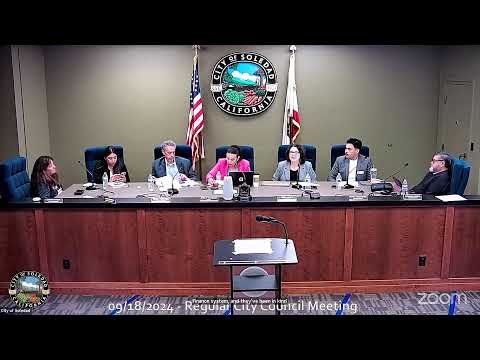
The City of Soledad received a comprehensive housing work‑program briefing on Sept. 18 as staff described priorities tied to the newly adopted 2023–2031 housing element.
Housing analyst Beatriz Trujillo detailed housing stock data and programs: roughly 37% of housing is renter‑occupied, of which about 424 units are already restricted or subsidized; the work plan includes pursuing Pro‑Housing designation, loan programs, up‑zoning in downtown, inclusionary partnerships with for‑profit and nonprofit developers, ADU facilitation and an affordable‑housing monitoring program. Trujillo also outlined tenant supports — hotel voucher programs, tenant resource contracts, bilingual tenant‑based voucher workshops and potential relocation assistance.
On tenant protections, staff explained legal distinctions between rent control and rent stabilization and noted AB 1492 provisions (a state tenant‑protection framework that allows annual increases set at inflation plus 5% or max 10%, just‑cause protections after 12 months, and relocation assistance in specified non‑fault evictions). Staff cautioned that many typical enforcement mechanisms are labor‑intensive: effective implementation of a local rental‑stabilization program requires dedicated staff and administrative capacity; comparable programs in larger jurisdictions have multiple full‑time staff dedicated to enforcement and hearings.
Councilmembers emphasized outreach: bilingual clinics, legal referral partnerships, practical advice for tenants (save receipts, avoid cash payments), targeted engagement of seniors and immigrant households, and a potential rental registry or tenant‑resources RFP. Staff said temporary grant‑funded positions have been posted to support encampment and housing work and indicated an RFP for tenant services and anticipated program rollouts in early 2025. The council did not take action but directed staff to advance tenant‑service procurement and to return with staffing/budget options for implementation.