Get Full Government Meeting Transcripts, Videos, & Alerts Forever!
Get email alerts on the Housing Element topic
No spam. Unsubscribe anytime.
Woodside council certifies EIR and adopts housing element after hours of public comment on wildfire risk and infrastructure
Summary
The Woodside Town Council certified a program-level EIR and adopted its Cycle 6 housing element July 23, 2024, including an ADU program change suggested by HCD; votes passed 4-1 with one recusal after public comments raised evacuation, VMT/greenhouse gas and sewer concerns. Council added direction for staff to study egress near Raymundo Drive.
The Woodside Town Council on July 23 certified a program-level Environmental Impact Report and adopted the town's Cycle 6 housing element, including an HCD-recommended change to the town's ADU program, after more than four hours of presentations and public comment.
Town Manager Kevin introduced the meeting's housing-package items, telling the council it must adopt the housing element, support rezoning actions on four sites and certify an EIR in order to pursue HCD certification. "The council tonight is considering adoption of the town's housing element as part of its general plan, and the most critical implementing actions of that plan, the rezoning of four pieces of land to multifamily," Kevin said during his opening remarks.
Why it matters: the housing element is subject to state review and the town is past the statutory deadline; HCD has signaled that the town needs not only a draft housing element but the associated rezonings to avoid enforcement actions. The EIR is programmatic (not project-level), which means future development on the rezoned sites will require separate project-specific environmental review and public hearings.
The EIR team summarized its findings: the program-level EIR includes mitigation measures that reduce many impacts to less-than-significant, but it identifies significant and unavoidable impacts for greenhouse gas emissions and vehicle miles traveled (VMT). "Even after implementation of feasible mitigation measures, the draft EIR determined that implementing the housing element would result in significant and unavoidable impacts related to greenhouse gas emissions and vehicle miles traveled," land-use attorney Matt Francois said.
Public concerns were wide-ranging. Neighbors near the proposed Raymundo and 773 Kenyatta sites pressed the council about emergency evacuation and single-egress roads. "This is a big problem evacuation," said John Hughes, describing narrow, winding roads and urging the council to require a second egress if density increases. Residents also questioned sewer capacity and septic-system suitability for the proposed sites; staff and consultants said sewer connections will be addressed by project-level review when developers submit specific plans.
Several speakers challenged the EIR's selection of sites and suggested more infill in or near the town center instead of concentrating changes near Woodside Hills and Kenyatta.
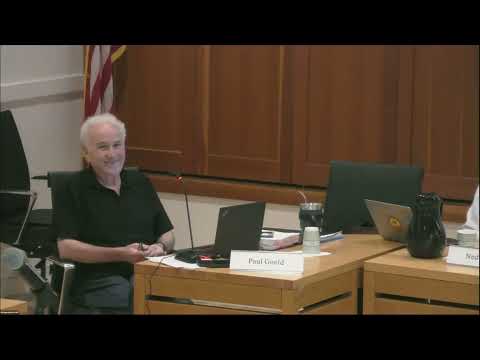
Council response and action: Councilmembers debated the tradeoffs between meeting state requirements and the community's public-safety and infrastructure concerns. Council Member Domkowski moved to certify the EIR, adopt the mitigation monitoring and reporting program, and approve a statement of overriding considerations with one addition: a resolution whereas directing staff to study and prioritize egress and infrastructure improvements near APN 072-041-040 (Raymundo Drive). That motion passed 4-1 with Council Member Gold dissenting and Council Member Brown recused.
ADU policy change: HCD had requested the town strengthen its approach to affirmatively furthering fair housing (AFFH). Staff told the council HCD indicated a commitment to expand the ADU program (previous drafts proposed allowing additional ADUs on properties 2 acres or larger) would achieve substantial compliance if expanded to apply to properties 1 acre or larger in the suburban-residential zone. The housing element therefore includes a program directing staff and the planning commission to draft an ordinance to allow the additional ADU capacity; the ordinance itself was not adopted that night and will be subject to later public hearings and development standards (setbacks, total floor area, wastewater, etc.).
Council adoption: After additional public comments and discussion, the council adopted the housing element, including the ADU-program change and language preferring affordable homeownership on town-owned sites. The adoption vote was 4-1 with one recusal.
What comes next: the EIR is programmatic, so when developers submit project plans for any rezoned site the town will perform project-specific CEQA review (negative declaration or project EIR as required) with public notice and hearings. Staff also will prepare the ADU ordinance and the objective design standards for the town-owned parcels; the council scheduled continued work on remaining agenda items for a special meeting on July 30, 2024.
Representative quotes from the meeting include a citizen admonition and staff reply: resident John Pugh told the council about an alleged local code enforcement failure: "Start enforcing the CUP immediately." Town Manager Kevin summarized the stakes for compliance with state law: "If the town does not adopt... the town may be subject to enforcement action from HCD or the attorney general's office, subject to a minimum fine... and could lose local land-use control." Matt Francois, the town's land-use counsel, summarized the EIR conclusion: "Because the EIR identifies these significant unavoidable impacts, the law requires that you prepare and consider... a statement of overriding considerations." Council Member Domkowski emphasized safety-direction in his amendment: "Whereas the Town of Woodside exists within a very high severity fire zone, and the ability of residents to evacuate in the event of fire... is fundamental to the health and safety of our community."
The council's adoption allows Woodside to proceed to the next steps: drafting implementing ordinances, reviewing objective design standards, and hearing project-level CEQA analyses for any future development proposals on the identified sites. Residents and neighborhoods will have further public hearings at those later stages.