Get Full Government Meeting Transcripts, Videos, & Alerts Forever!
Get email alerts on the Leaf Blower Ordinance topic
No spam. Unsubscribe anytime.
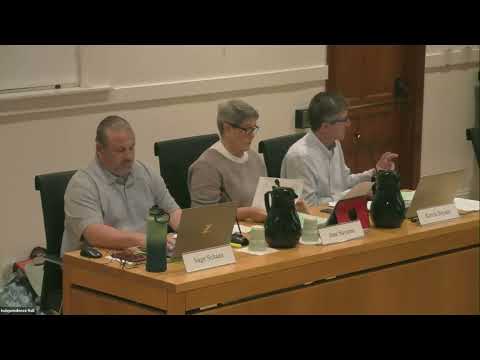
Woodside council hears heated debate over proposed ban on gas‑powered leaf blowers and rebate expansion
Summary
Council introduced a draft ordinance to ban gas‑powered leaf blowers with exceptions for parcels of 5+ acres and declared local emergencies, paired with an expanded electric gardening rebate; debate focused on noise vs. pollution, the 5‑acre cutoff, emergency and permit exceptions, equipment performance on large or redwood‑canopy properties, and enforcement. A council motion to replace the 5‑acre exemption with a $25 ministerial permit failed 3–3.
The Woodside Town Council took up an introduction of an ordinance to prohibit gas‑powered leaf blowers while expanding rebates for electric gardening equipment, triggering a lengthy public comment period and split council debate.
Staff presentation: Brandy (planning staff) told the council the draft ordinance (new code §94.06) mirrors state small off‑road engine rules and staff research into local exemptions. Staff proposed exempting parcels 5 acres or larger, adding a declared‑local‑emergency exception, and expanding a Peninsula Clean Energy grant‑funded rebate program administered with Acterra that would dedicate roughly 76% of the available grant funds to rebates and extend the program through June 30, 2025. Staff proposed an effective date for the ordinance of July 1, 2025 to allow residents and contractors time to convert equipment.
Public comment: Multiple residents questioned the 5‑acre threshold as arbitrary and stressed variability in tree coverage, slope and fire‑risk conditions across neighborhoods. A Stanford student (Theo Strauss) and local commenters urged inclusion of noise impacts in the ordinance rationale and a shorter implementation timetable. Several residents who live in redwood‑canopied, steep or large parcels (including speakers identified as Hassan and Hassan Abarish) described practical limits of electric equipment, noting reduced run time, battery‑swap logistics, and the need for high‑power backpack or gas units to maintain defensible space for fire safety. Others testified electric blowers greatly reduce noise and emissions for smaller properties.
Council debate: Members probed whether the pollution claims were specific to leaf blowers or aggregated small engines; staff said the state ban covers small off‑road engines and leaf blowers fall within that category. Council discussed alternatives including a ministerial permit (nominal fee) or a written town‑manager authorization for emergency use similar to Portola Valley. Councilmember Brown moved to delete the 5‑acre exemption and replace it with a ministerial $25 permit available to any property owner without stating a reason. The motion was seconded and failed on a 3–3 roll call. Commissioners described competing priorities: environmental and noise mitigation advocates versus residents and landscapers in fire‑prone areas who say gas equipment performs materially better for large properties.
Enforcement and rebates: Staff said code enforcement would remain complaint‑based, beginning with education and escalating to infractions for repeat violations. Staff emphasized the rebate program includes a professional‑level $1,000 rebate for larger properties and landscapers that maintain business licenses in town, intended to help commercial users adopt higher‑capacity electric equipment.
Next steps: The ordinance was introduced and returned to further consideration; council direction included exploring clearer emergency exception language, refining the parcel‑size exemption, and improving permit or authorization options for residents with demonstrated operational needs.