Get Full Government Meeting Transcripts, Videos, & Alerts Forever!
Get email alerts on the Floodplain Policy topic
No spam. Unsubscribe anytime.
Roseburg staff warns FEMA floodplain rule changes could slow development; Dec. 1 PICM deadline looms
Summary
City planning staff told the commission FEMA is asking cities to choose a pre‑implementation compliance measure (PICM) by Dec. 1, 2024. Staff said options include adopting a model ordinance requiring habitat assessments, case‑by‑case permits, or prohibiting floodplain development, and warned of uncertain costs and reporting burdens.
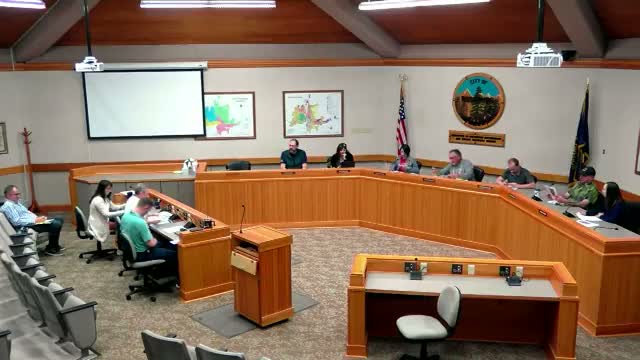
City planning staff told the Roseburg Planning Commission on Oct. 7 that a 2016 National Marine Fisheries Service biological opinion has prompted FEMA to change how floodplain development is administered in Oregon and that FEMA expects cities to select a pre‑implementation compliance measure (PICM) before Dec. 1, 2024.
Why it matters: Staff said the changes aim to protect endangered species — staff specifically cited coho salmon and green sturgeon — but the options FEMA set out vary sharply in cost, staffing needs and discretion. Choosing a PICM will affect developers, neighbors and property owners within the floodplain and could require applicants to hire specialists and lengthen permitting timelines.
City staff summarized three PICM options FEMA provided: (1) adopt FEMA’s model ordinance that would require habitat assessments and no‑net‑loss mitigation for species and habitat; (2) require a habitat assessment and mitigation plan on a permit‑by‑permit basis; or (3) prohibit development in the special flood hazard area. Staff said option 3 is not feasible for the city and that options 1 or 2 currently appear most likely.
Staff warned about practical implications: applicants may need to hire qualified biologists to perform habitat assessments, the pool of qualified contractors and associated costs are uncertain, and the city would have new annual reporting obligations to FEMA about activities such as fill placement or tree removal. Staff also said FEMA has paused some conditional and letter-of-map‑revision processes (CLOMR‑F/LOMR‑F), limiting applicants’ options in the short term.
On process and timing, staff said the federal plan is still under National Environmental Policy Act review with expected final implementation in 2026–2027, but the PICM pre‑implementation step requires action now. "You need to do so before December first of 20 24," staff told the commission, adding the city will continue to press for clarity and additional time from FEMA while preparing communications to affected property owners.
Staff urged property owners with pending floodplain work to submit complete applications prior to Dec. 1 so the city can begin processing them under the current rules. The commission asked for a follow‑up update at the November meeting after a scheduled FEMA workshop and staff agreed to provide additional information then.