Get Full Government Meeting Transcripts, Videos, & Alerts Forever!
Get email alerts on the State Tax Impact topic
No spam. Unsubscribe anytime.
Commissioners discuss state special session tax changes and possible local budget impacts
Summary
County staff summarized outcomes of the state special session — including changes to income tax structure, increased standard deductions, elimination of Social Security taxation (as stated), and a $75,000 residential exemption — and commissioners debated how shifting valuations and exemptions could raise local property tax collections and require USDs or local sales tax measures to cover revenue gaps.
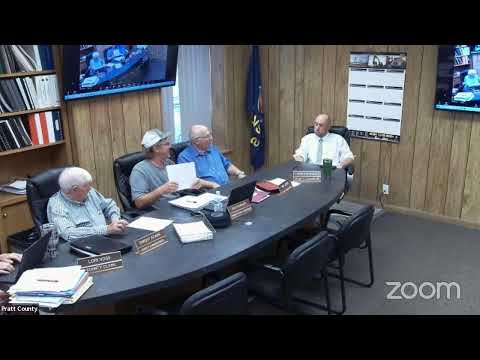
County staff and commissioners spent a substantial portion of the meeting discussing recent state-level tax changes and how they could affect Pratt County’s budget.
Heather (role not specified) summarized outcomes of the state’s special legislative session, saying the governor signed a tax bill that establishes a two‑tier income tax structure and alters exemptions and credits. In the meeting she described increases to standard deductions and stated that the bill would move the residential property tax exemption to $75,000 and eliminate state tax on Social Security income (as she reported). She also said negotiations to include LAVTR in the package failed and that the session approved star bond legislation to support potential professional sports incentives funded largely by sales tax and lottery proceeds.
Commissioners examined the county’s valuation outlook and how the R&R (restore and replacement mill levy calculation referenced in the discussion) interacts with state assessments. One commissioner noted that, if valuations rise and R&R were applied, county collections could increase by about $4.5 million under the example used in the meeting; another emphasized the change represents a tax shift rather than an action by the county: "That's nothing that the county did," a commissioner said.
Members discussed the practical results of the state exemption increase: school districts (USDs) would likely need to make up lost revenue, and some counties have turned to sales tax measures that go to voter approval to offset property tax impacts. Commissioners said they would need additional statutory clarity and data before considering any local sales tax measures.
The commission did not take formal action on state policy but scheduled a budget workshop and asked staff to prepare figures reflecting the new valuations and exemptions so commissioners can consider options when the county meets Wednesday.
The county’s next step is to review the budget presentation and associated valuation numbers at the scheduled workshop, after which the board may consider policy or revenue options.