Get Full Government Meeting Transcripts, Videos, & Alerts Forever!
Get email alerts on the Emergency Services topic
No spam. Unsubscribe anytime.
Pratt County fire and rescue leaders show compact rescue/engine options as commissioners weigh repair vs. replacement
Summary
Pratt County Fire and Rescue described several apparatus options, demonstrated a compact suppression system and outlined testing they say reduced suppression time on vehicle and tire burns. Commissioners discussed repair versus a new rescue/pumper purchase, noting costs ranging from roughly $241,000 to as much as $350,000 for fully equipped rigs and that current funds would not fully cover a high‑spec vehicle.
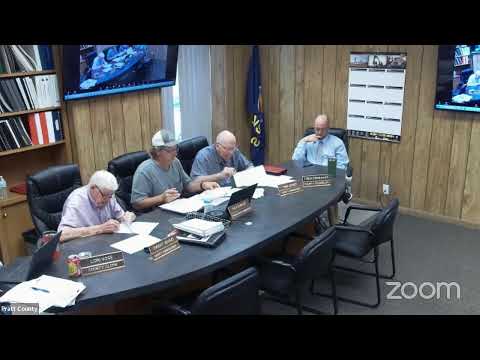
Fire and rescue personnel and a visiting demonstrator briefed the Pratt County Commission on July 15 about options to address aging apparatus and new approaches to vehicle fire suppression.
Hampton of Pratt County Fire and Rescue opened with a recap of recent mutual aid at a wreck and thanked neighboring departments for their response. He said estimates are hard to get quickly and described the fleet's oldest truck (a 1989 Ford) as still useful but nearing a point where replacement or major repair is needed.
A presenter who demonstrated a compact suppression system described long-term testing and a patent on the system and said it significantly reduced water use and overhaul time in controlled vehicle and tire burns. The presenter asserted the system reduces oxygen to the seat of the fire and increases cooling efficiency: "Water only attacks one side of the fire triangle... We're doing over a percent with this. There's zero runoff, zero contamination," (Unidentified Truck Presenter).
Commission discussion focused on cost and fit. One example vehicle in the packet was priced at $241,476.50; speakers noted that a fully outfitted vehicle with jaws and other rescue tools could approach $350,000. Hampton reported $203,002.79 available in the Fire and Rescue special equipment fund, leaving a gap versus some purchase options. Commissioners debated repairing an existing engine (estimates in the low tens of thousands) versus buying a newer, more capable rig; several emphasized constrained budgets and the need to prioritize a rescue configuration over a heavy firefighting engine.
Training and partnerships also came up: Hampton asked whether a grain‑entrapment training (sponsored locally) could be opened to area departments and discussed logistical support needs. Commissioners agreed to explore opening the class location and liability arrangements with OSU, and suggested coordination on manpower and catering as practical considerations.
Next steps: Commissioners asked staff to return with budget availability and more precise specifications so the board can weigh options during the budget process. No purchase motion was made at the meeting.