Get Full Government Meeting Transcripts, Videos, & Alerts Forever!
Get email alerts on the Property Taxes topic
No spam. Unsubscribe anytime.
Pratt County OKs tax levy above revenue-neutral rate, adopts 2025 budget after public outcry over higher property bills
Summary
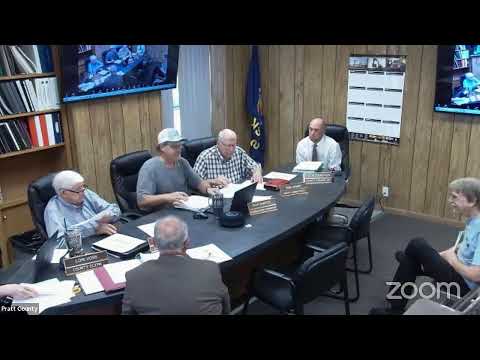
Pratt County commissioners voted 3-0 on Sept. 16 to adopt a resolution levying property taxes above the revenue-neutral rate and to approve the 2025 budget; residents told the board steep assessment changes tied to state natural-gas valuations and rising insurance costs are driving large tax increases.
Pratt County commissioners voted 3-0 on Sept. 16 to adopt a resolution to levy property taxes above the state-calculated revenue-neutral rate and then approved the county's published 2025 budget.
The resolution, which the clerk read into the record, states the county's revenue-neutral rate was calculated at 62.851 mills and that the board determined it was "in the best interest of Pratt County to exceed the revenue neutral rate." During a roll-call vote the board recorded three yes votes and the clerk declared the motion carried; the resolution takes effect immediately upon adoption.
The decisions followed nearly two hours of public comment and staff explanation about why the levy had to rise. Business owner Paul Shersep, who identified himself as the owner and operator of the Baymont by Wyndham in Pratt, told commissioners his hotel's property tax bill jumped sharply after a recent reassessment. "I bought the hotel in 2022... the property tax that I paid for that particular property was 49,982 and the very next year... the property taxes went up 83%," Shersep said, adding that a further 23% increase is projected for the coming year and that taxes could consume much of his profit.
County staff and a county advisor explained the technical driver: a large drop in state-assessed value for local natural-gas reserves. "They valued it... like $7.39 per unit and then this year... it went down to $2.29," County staff (Speaker 3) said in the hearing, describing a roughly $14 million reduction in state-assessed valuation that produced a tax shift. Under Kansas's revenue-neutral calculation, a loss in state-assessed value can raise local mill levies so the county collects approximately the same total dollars as the prior year.
Commissioners also pointed to other cost pressures. The board said property insurance had risen this year and was expected to rise again next year, and that those increases were a principal reason the levy would exceed the revenue-neutral rate. Commissioners said most department budgets were held flat for 2025 after prior years of cuts aimed at rebuilding unencumbered cash balances.
Residents at the hearing raised related concerns about affordability, housing and local services. Joe Goetz, a longtime resident, said he received two different tax notices showing different percentage allocations and asked the county to clarify mailing and appraisal processes. Other commenters questioned why the county did not realize more local benefit from wind farms and asked about the location of an ambulance base outside town.
The board then held a separate published hearing on the 2025 budget. With no substantive objections from taxpayers, a commissioner moved and the board approved the budget as published by voice vote.
What happens next: the resolution and budget are in effect following adoption; commissioners and staff said they will continue to pursue options to reduce future pressure on homeowners and businesses, including a housing study, exploring tax abatements for new construction, and seeking higher investment returns on county cash balances. Staff urged taxpayers who receive confusing notices or who believe their assessed values are incorrect to pursue the formal appeal process with the county assessor.
(Reporters: article uses direct quotes from the hearing transcript and attributions correspond to speakers identified in the public record.)