Get Full Government Meeting Transcripts, Videos, & Alerts Forever!
Get email alerts on the Tax Policy topic
No spam. Unsubscribe anytime.
Proposal to add dedicated fire & rescue tax fails after public opposition
Summary
A board proposal to amend the local tax code to allow a dedicated fire & rescue tax (to be set later if adopted) generated heavy public opposition; speakers argued it would complicate exemptions, reduce budget flexibility and open the door to additional carved‑out taxes. Motion to adopt failed 6–1.
County staff presented an amendment to the local tax code that would allow the board to adopt a dedicated fire and rescue tax at a later date. Finance staff stressed that any revenue from such a tax could be dedicated only to fire, rescue and emergency management expenses and that adoption of the code change would not immediately impose a new tax rate.
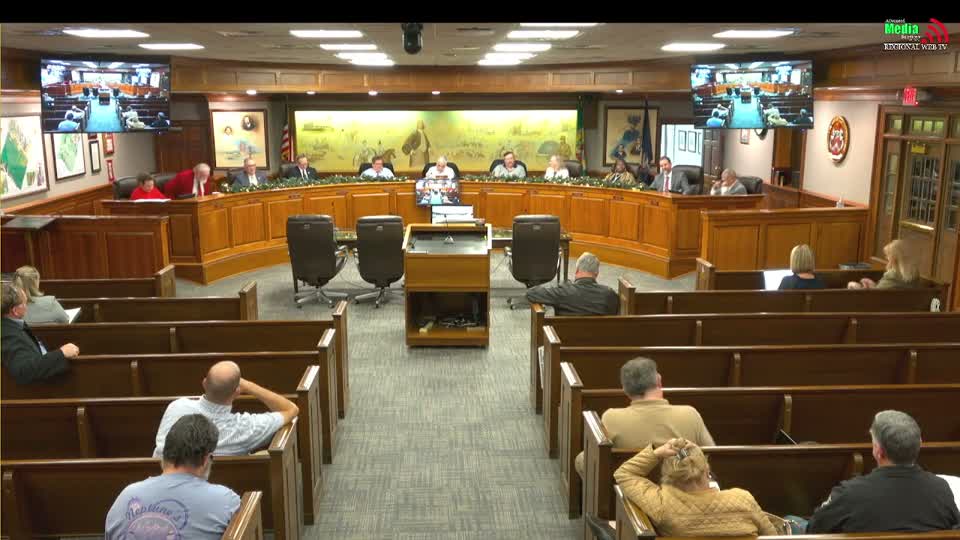
Public testimony was strongly opposed: representatives of veterans’ organizations, senior and conservative groups, and many residents urged the board to reject the code change. Opponents raised several points: the state exemption for disabled veterans covers real‑estate tax but may not apply to a new special tax; carving out categories of taxes reduces budget flexibility; the county budget and tax bills already provide transparency, and residents feared the proposal would be a first step toward layered, perpetual special assessments for other services.
Board discussion highlighted divergent views: some supervisors said the county already has increased spending on public safety and that greater transparency — such as adding a clear insert on tax bills showing how each dollar is allocated — would be preferable. Others argued a dedicated line item would make budgeting and future planning clearer. The motion to adopt the enabling code amendment failed on a roll-call vote, 6–1.
Outcome: Staff will not change the tax code based on this vote; supervisors and staff discussed alternative transparency measures and continued budget scrutiny.