Get Full Government Meeting Transcripts, Videos, & Alerts Forever!
Get email alerts on the Bylaws Overhaul topic
No spam. Unsubscribe anytime.
Stafford supervisors direct redraft of bylaws after lengthy debate on agenda, closed‑session and voting rules
Summary
The Stafford County Board of Supervisors reviewed a near‑complete rewrite of its bylaws and instructed the county attorney to return a redlined draft Oct. 15 after debates over holiday calendar procedure, draft‑agenda timing, closed‑session request deadlines and voting rules.
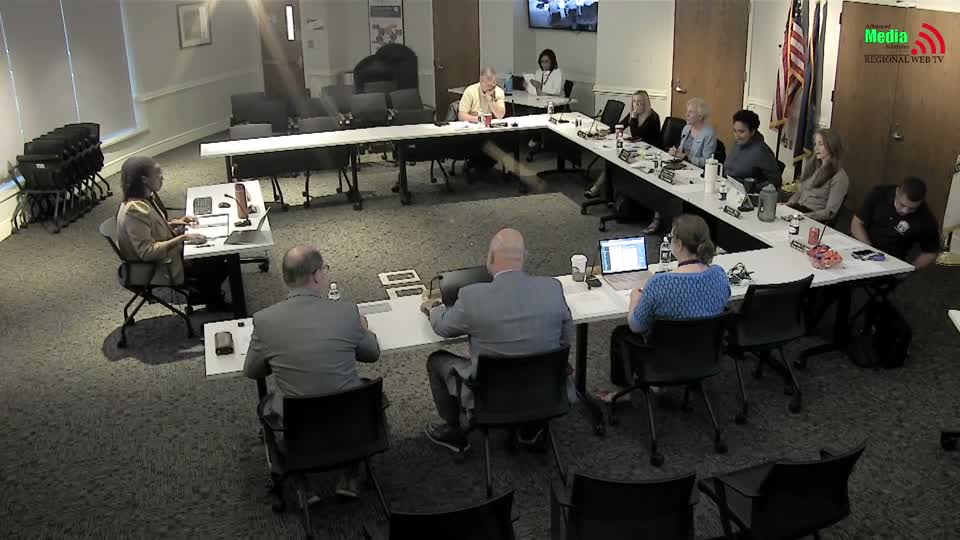
Stafford County supervisors spent a work session reviewing a near‑complete rewrite of the board’s bylaws and directed County Attorney Rashida McClendon to prepare a redlined version reflecting tonight’s guidance and return it to the board on Oct. 15. The session focused on procedures that govern how the board sees and votes on items, what can be taken to closed session, and how members communicate publicly.
McClendon told the board the draft was substantially reorganized and, because it amounted to a near rewrite, staff summarized substantive changes in a PowerPoint rather than issuing a conventional redline. Supervisors debated many of those substantive proposals in detail, asking staff to clarify practical effects before formal adoption.
Why it matters: the bylaws set the board’s internal rules for agenda preparation, voting and access to closed session and shape how quickly and transparently the county makes decisions. Changes the board discussed could alter when items appear on the agenda, how members are notified of late changes, and the legal posture for emergency closed‑session requests.
Board members pressed staff about several specific provisions. They agreed to remove the adjective 'adequate' from the minutes section after the county attorney noted the bylaws already list required minute elements (votes, attendance and summary of deliberations). Members also discussed codifying a standard interval for draft agendas so supervisors have time to prepare: staff described the current practice—chair/vice‑chair meeting Thursday, draft to board Friday—and supervisors proposed formalizing a deadline (for example, no later than 10 days before regular meetings or by close of business the day after chair/vice‑chair review).
Closed sessions prompted particularly robust debate. The draft had proposed requests for closed‑session items be submitted to the county attorney by 10:00 a.m. the day before a meeting to allow legal and staff coordination. Several supervisors warned that a strict deadline could prevent timely handling of appointments or urgent land‑use matters; the county attorney said the deadline could be removed or edited and that emergencies would remain permissible by board motion.
The board also discussed voting procedures. One proposed change would tighten the process for reconsidering votes after a member says they pressed the wrong electronic button, keeping the 'motion to reconsider' requirement as the remedy rather than allowing informal revotes. Members endorsed clarifying how abstentions are recorded (the draft references a separate subsection; staff indicated abstain would be shown as 'yellow' in the electronic system) and reaffirmed the availability of a motion to 'call the question' once everyone who wishes has had one turn to speak.
Among procedural topics raised were whether individuals representing advisory committees (such as the BACC) may present during public hearings. McClendon said that existing bylaws already allow a committee member to present where the committee considered the specific matter, but such appearances should be cleared with the chair in advance or occur during public comment.
The board avoided final votes on the bylaws but reached consensus on direction: supervisors agreed to remove three standing committees from the bylaws (legislative, workforce & affordable housing, and bylaws committee) and asked McClendon to provide a redlined draft reflecting those and other agreed edits for the Oct. 15 work session. The county administrator and staff were asked to provide timeline and resource estimates tied to the county’s strategic plan for items—especially affordable housing—that will be reported to the board at the January advance.
Next step: County Attorney McClendon will return an edited, redlined draft on Oct. 15; the board will review that document in a work session before any formal adoption vote.