Get Full Government Meeting Transcripts, Videos, & Alerts Forever!
Get email alerts on the Utilities topic
No spam. Unsubscribe anytime.
Stafford utilities warn PFAS rules and aging infrastructure will increase customer-funded costs
Summary
County Chief Operating Officer Chris Edwards told supervisors the utilities department faces significant capital needs — neighborhood transmission, plant upgrades and PFAS regulatory compliance — that are unlikely to be fully covered by competitive grants and will probably be paid by water and sewer user fees; staff plan a FY27–29 rate model adding reuse rates for a new reuse system.
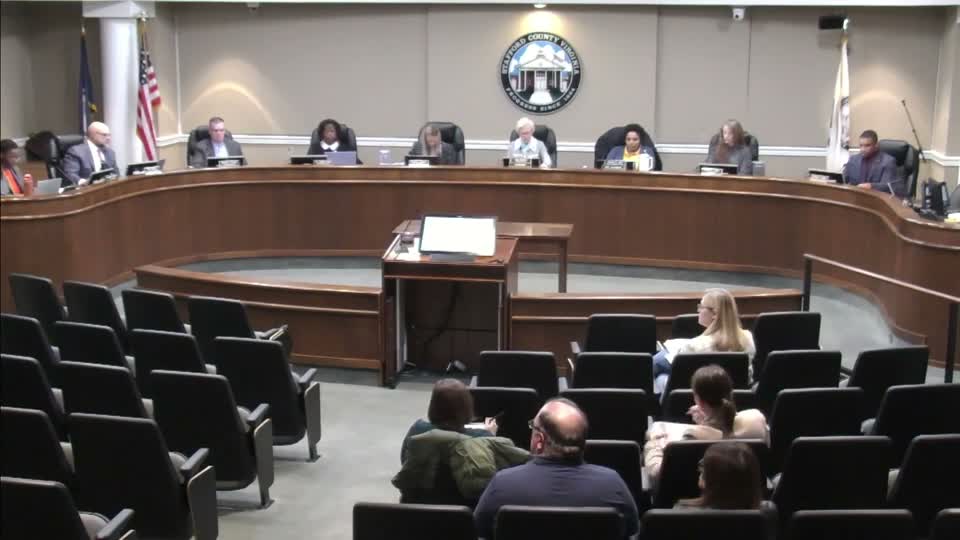
Chris Edwards, Stafford County chief operating officer, presented the utilities department’s multi-year financial and capital plan, telling the Board of Supervisors on Nov. 19 that aging distribution mains, two upcoming plant upgrades and evolving PFAS federal and state regulations will drive capital spending and likely require customer-funded rate increases.
Edwards outlined three major hurdles facing utilities: (1) a concentrated program of '3R' renewals for aging infrastructure (the Ferry Farm neighborhood replacement project replaced roughly five miles of water main after repeated main breaks); (2) capital projects driven by a water and sewer master plan and a need to extend Lake Mooney water resources northward to reduce stress on Smith Lake facilities; and (3) personnel gaps requiring steady staffing growth (Edwards noted a target of roughly 2% annual staffing growth and identified pinch points such as lab technicians and procurement specialists).
On regulatory compliance, Edwards said the U.S. Environmental Protection Agency’s new PFAS regulations will require significant upgrades at at least one water plant and possibly others in the county. Although the county has engaged consultants to pursue grant funding, Edwards warned the competition for federal/state funds is high and grant awards could be small. "This mandate will probably come from and have to be supported by water and sewer user fees," Edwards said.
Edwards also previewed plans to include reuse system rates in the FY27–29 rate model because a new reuse system is coming online and reuse customers will bear those costs separately from standard potable water and sewer rates.
Board members asked about capacity implications for proposed commercial projects (including Buc-ee's) and whether commercial-only rate adjustments are allowable; Edwards confirmed separate commercial and residential rate schedules exist and staff will research whether targeted rate actions are permissible under code. Supervisors requested clearer footnotes on presentation slides (e.g., red items indicating data-center driven projects).
What’s next: Staff will finalize a FY27–29 three-year rate model (including reuse rates), continue master-plan work, and return with more detailed cost estimates, grant efforts and fee options.