Get Full Government Meeting Transcripts, Videos, & Alerts Forever!
Get email alerts on the Transportation topic
No spam. Unsubscribe anytime.
Board adopts transportation master plan and scales impact fees to 50% amid business concerns
Summary
Stafford supervisors adopted the 2024 Transportation Master Plan and, after public hearings and debate, approved a new transportation impact-fee ordinance set at 50% of the consultant recommendation with an implementation date of July 1, 2025, citing the need to fund priority road projects while reducing immediate developer burden.
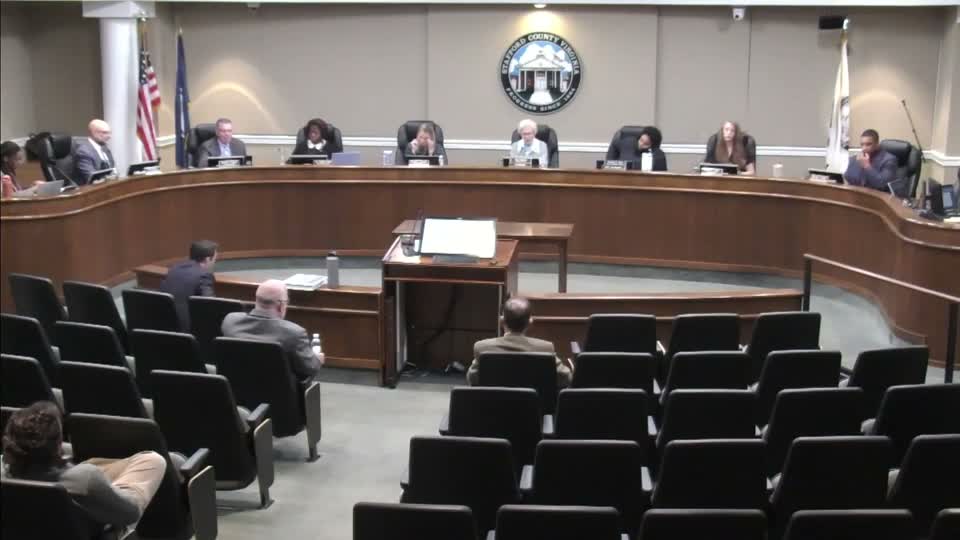
The Stafford County Board of Supervisors on Nov. 19 adopted a new 2024 Transportation Master Plan and approved a companion transportation impact-fee ordinance set at half the consultant-recommended rates, effective July 1, 2025.
Staff presented the master plan as a performance-based blueprint that lists priority projects across three phases — Phase 1 identified roughly $200 million in projects (a quarter of which staff said should be under construction next year) and an overall program of roughly $1.1 billion for long-term improvements. Staff’s consultant estimated that, at the proposed rates and given recent development activity, implementation could generate roughly $15–20 million in fee revenue annually to fund projects that directly serve new development.
The public hearing drew extensive comment from builders, commercial developers and residents. Speakers including builders’ association representatives and commercial developers warned that consultant assumptions overstated near-term commercial growth and that the proposed fees, as drafted, would add significant percentage costs to many projects (examples discussed by commercial speakers included large warehouses, restaurants and retail facilities). Other public speakers urged the board to move quickly, saying current congestion and emergency-response times require major capital investment.
After debate about economic-development effects, fairness across projects and data assumptions, the board considered motions and substitutes. A motion to adopt the new impact-fee ordinance with the consultant-recommended charges reduced to 50% and an effective date of July 1, 2025, passed 5–2. Supporters said the scaled start gives the county a path to collect dedicated revenue for prioritized road projects while moderating the immediate cost to developers; opponents argued the program needs further refinement and more time to address data and distribution concerns.
The plan and fees create two service areas (north and south) and include mechanisms for credits where proffers or developer-funded improvements already address impacted road capacity. Staff said fees will be indexed and that the county will continue pursuing state/federal matching and other funding sources for major projects such as river crossings and north–south corridor improvements.
What’s next: Planning and Finance staff will implement the fee collection mechanism, publish guidance for developers on credits and proffers, and begin tracking fee receipts against project lists; the effective date allows time for administrative setup and outreach.