Get Full Government Meeting Transcripts, Videos, & Alerts Forever!
Get email alerts on the Adult Business Regulation topic
No spam. Unsubscribe anytime.
Commission forwards adult-business definition and supplemental standards to Board for public hearings
Summary
Planning staff proposed—and the planning commission forwarded—a zoning text amendment to define "adult business," require conditional-use permitting in commercial and industrial districts, and add supplemental procedures and standards to strengthen legal defensibility under the First Amendment; no applications currently exist.
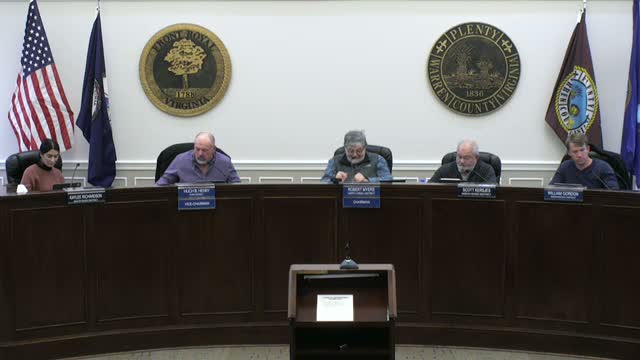
The Warren County Planning Commission on Dec. 11 voted to forward a zoning text amendment that would define "adult business," make such uses permissible only by conditional use permit in commercial and industrial zoning districts, and add supplemental procedures and standards intended to reduce the county's legal risk.
Planning staff said the Warren County Zoning Ordinance lacks a definition, procedures or standards that distinguish adult businesses from other commercial uses, and staff recommended adding a definition plus supplemental standards for denial factors and procedural safeguards to improve the county's legal posture if an application were filed. Staff told the commission that no applications or communications related to prospective adult businesses have been received; the amendment is preventive.
The county attorney and staff explained the rationale: crafting a precise definition and procedural factors makes a denial more legally defensible under federal First Amendment case law, while avoiding overly broad language that might sweep in other legitimate venues. Commissioners asked whether a 5% test for determining whether an operation is "principal" adult use might inadvertently apply to performance halls or other venues; staff said the test is intended to be narrow and that uses that merely restrict minors (for example, alcohol service at a performance venue) would not be captured if content of the venue does not meet the adult-business definition.
After no public speakers addressed the item, a commissioner moved to find the amendment appropriate for public necessity, convenience and general welfare and to forward it to the Board of Supervisors with a recommendation of approval; the motion was seconded and carried on a voice vote. The commission authorized advertising the text amendment for public hearings next month.
If adopted by the Board, the changes would add procedural and substantive standards to the zoning ordinance to guide consideration of future adult-business CUP applications and to support defensible denial criteria should the county choose to deny an application.