Get Full Government Meeting Transcripts, Videos, & Alerts Forever!
Get email alerts on the Library Governance topic
No spam. Unsubscribe anytime.
Warren County supervisors press Samuels Public Library on governance, endowment and communications
Summary
At a special Board of Supervisors work session, members probed Samuels Public Library trustees about trustee representation given heavy taxpayer funding, how the library’s roughly $1.08 million endowment is used, and the public "closing" narrative that followed MOA negotiations; trustees agreed to provide more detailed budget breakdowns and performance measures.
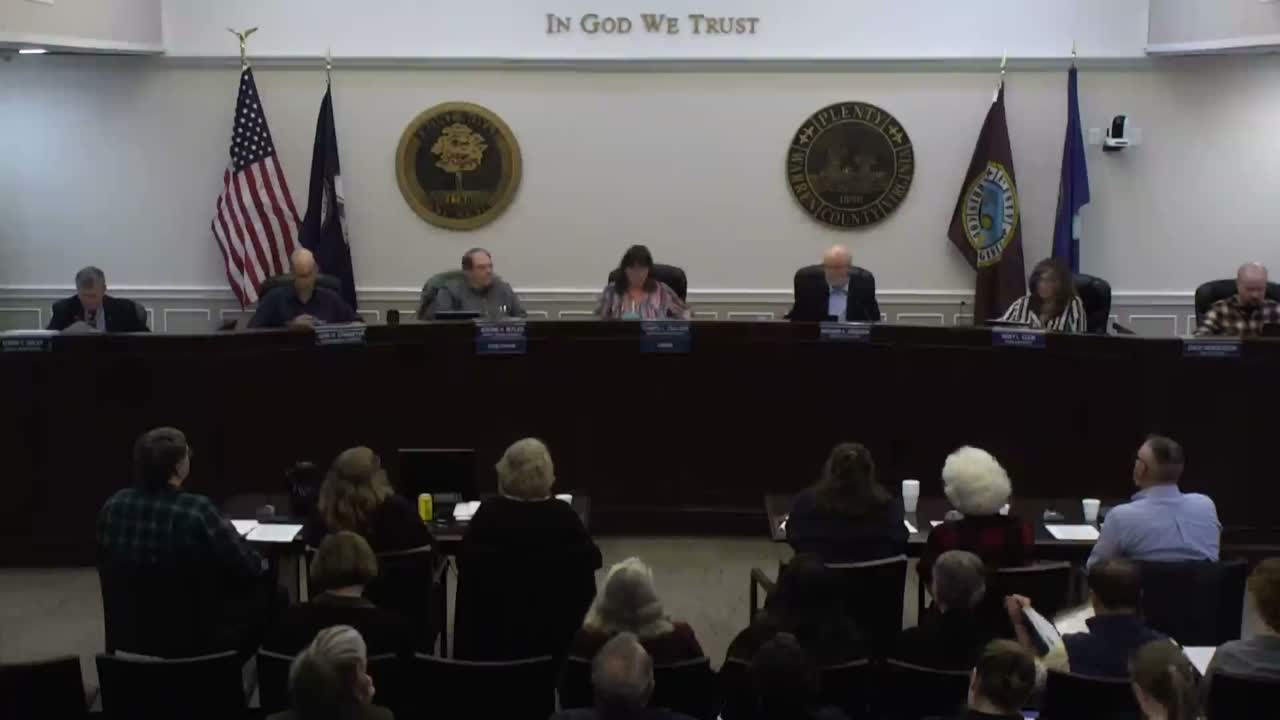
Warren County supervisors used a special work session to press Samuels Public Library trustees for more detail on governance, the library’s roughly $1.08 million endowment and the public-relations fallout from contract negotiations last year.
"This is a fiduciary responsibility the board of supervisors have," said Dr. Jamieson, the subcommittee co‑lead who opened the discussion, citing a county analysis that lists roughly $23,059,000 in county/taxpayer contributions to Samuels from 2007–2023 and an assertion that the county’s share represented about 88% of the library’s funding in that period. The presentation also flagged a governance imbalance: one county representative on a board of 16 trustees.
Samuels board president Melody Hotek disputed parts of the county’s numbers and said trustees’ audited statements show taxpayers funded an average of 69% of reported expenses. "The library is accountable to the taxpayers," Hotek said, pointing to the organization’s audits, public filings and a memorandum of agreement (MOA) that provides for biannual reporting to the board of supervisors.
Supervisors asked for documentation on several procedural points: how trustee candidates are selected, whether the county appointee participates in the trustee interview process, and where the library’s policies describing the voting rights of the county representative are published. Trustees said selection policies and trustee contact information are available on the library’s website and offered to furnish written policy language and audits on request.
The meeting included a detailed discussion of the library’s endowment. A Samuels representative clarified that the pool commonly called the "investment fund" is an endowment built from donations, grants and bequests and that the library follows a distribution guideline of about 3% annually to supplement operating income while preserving principal. "It is not an investment fund. It is an endowment fund," the trustee said, adding that donor restrictions limit how some funds and interest can be used.
Dr. Jamieson and other supervisors also revisited a 2011 arrangement the county made with the library that they said involved $550,000 in cash payments and $231,000 in loan forgiveness. Using a long‑term performance assumption (the county presentation used 6.4% in its model), the board’s analysis modeled how those transfers contributed to the endowment’s present value (the presentation estimated roughly $1,080,956). Dr. Jamieson said the transfers merited awareness when supervisors consider county stewardship of taxpayer funds; trustees responded that the county purchased the building and that the library treats the endowment as restricted and governed by donor intent and board policy.
Supervisors also raised the public controversy last year in which a narrative circulated that the library might close amid MOA negotiations. Trustees said the narrative was thrust on them, that the library engaged outside public‑relations counsel during the dispute and that the organization responded to public records requests and media coverage. "There was a 4‑to‑1 vote publicly to withhold funding in June," a trustee noted when discussing the sequence that heightened public concern; trustees said the board and staff preferred clearer, more direct communications earlier in the process to avoid alarm.
The session covered fundraising as well. Hotek said Samuels secured a competitive $500,000 Mellon Foundation grant and described a strong fundraising response following the dispute, including donors from outside the region. Supervisors encouraged trustees to leverage awards for increased private support while noting county budget constraints.
On next steps, supervisors asked Samuels to provide a more detailed, categorical breakdown of how the county appropriation (described in the meeting as roughly $1,024,000 in recent cycles) is applied across salaries, utilities, maintenance and programs. Trustees agreed to supply the requested line‑item and audit reports, noted they already provide biannual performance reports under the MOA, and invited supervisors to attend trustee finance‑committee meetings and annual audits.
The meeting closed with board members agreeing to collect and circulate action items for follow up. No formal policy changes were enacted at the session; supervisors directed staff and trustees to continue the information exchanges and to consider options — including structural options for separating fundraising/endowment stewardship from day‑to‑day operations — as part of ongoing oversight and budget reviews.