Get Full Government Meeting Transcripts, Videos, & Alerts Forever!
Get email alerts on the Library Governance topic
No spam. Unsubscribe anytime.
Residents urge board to leave Samuels Library management intact as supervisors authorize public hearing on county library board
Summary
Dozens of residents urged the Warren County Board of Supervisors to abandon plans for a county-run library board, calling Samuels Library a community asset and accusing some supervisors of religious or political motives. The board voted to authorize a public hearing to consider an ordinance to form a Warren County Library Board.
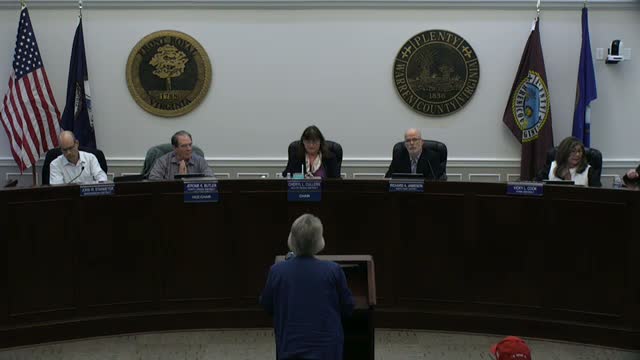
Dozens of residents told the Warren County Board of Supervisors on Nov. 19 that Samuels Public Library should remain under its current public‑private partnership and opposed a proposal to create a Warren County Library Board to oversee it.
Supporters of Samuels described the library as an award‑winning community hub and warned the board that county control could jeopardize the nonprofit’s tax-exempt donations, state matching funds and services. ‘‘Samuels offers an amazing collection for all ages and interests,’’ said Lisa Jenkins, who identified herself as a South River District resident and volunteer. ‘‘If you reduce the county budget for Samuels at all, the matching state funding will completely disappear, so please don’t do that.’’
The debate stems from a 35‑page governance and finance report prepared by Dr. Jamieson, which he presented in a Nov. 12 work session and subsequently distributed. The report argues that public funding and governance are misaligned and recommends structural change. Dr. Jamieson defended his analysis at the meeting, saying the ‘‘financial numbers either add up or they don’t’’ and urging opponents to respond to the report’s substance rather than attacking his motives.
Residents who oppose a county board characterized the proposal as politically or religiously motivated. Jana Brohm said she believed Jamieson had sought input from a Front Royal Catholic civic group, calling the effort ‘‘another attempt by this religious faction to control and limit open discussion.’’ Several other speakers, including multiple retired teachers and longtime volunteers, recounted how the library shaped their lives and stressed the institution’s broad community value.
A smaller group of speakers urged creation of a county board to give taxpayers more representation over library spending. John Lundberg (Happy Creek District) said county taxpayers provide a disproportionate share of library funding and argued a county board would ensure accountability.
The supervisors debated but did not adopt a final governance change at the meeting. Instead, the board voted to authorize advertising a draft ordinance that would add Chapter 7 to the Warren County Code to create a Warren County Library Board and set a public hearing. The roll call, as recorded at the meeting, showed Mr. Stanmeyer, Mr. Butler, Dr. Jamieson and Mrs. Cook voting ‘‘Aye’’ and the Madam Chair recording ‘‘No.’’
Questions raised at the meeting included: how an appointed county board would be selected, whether it would affect the library’s nonprofit status, what the estimated cost to the county would be, and whether state matching funds would be affected. Speakers and supervisors referenced a recent $500,000 Mellon Foundation grant and the library’s recognition as Virginia Library of the Year in 2024.
Dr. Jamieson told the board he had sought corrections from local publications that he said mischaracterized his distribution of the report, calling some coverage ‘‘fake news’’ and saying retractions had been demanded. He said his report focuses on governance and fiscal data, and that those facts stand regardless of his personal affiliations.
Next steps: the board authorized advertisement of the ordinance, which begins the process of scheduling a public hearing; no final governance change was adopted at this meeting. The public hearing date will be set through the advertised process and will provide another opportunity for public testimony and for the board to vote on any ordinance.