Get Full Government Meeting Transcripts, Videos, & Alerts Forever!
Get email alerts on the Local Infrastructure Veterans topic
No spam. Unsubscribe anytime.
Residents press for Chip Ridge Road upgrades; veterans group proposes "People's Gulf War Memorial"
Summary
During public comment, a Chip Ridge Road resident urged the county to address road narrowing, drainage and safety problems; later a citizens’ team and the Damascus VFW presented paid and donated options for a Gulf War memorial or a plaque and were advised to coordinate with the Veterans Memorial Board.
Two items outside the consent and budget votes drew sustained public attention at the Aug. 27 Washington County Board of Supervisors meeting: a resident’s plea for road repairs on Chip Ridge Road and a veterans group’s presentation requesting placement of a Gulf War memorial or interior plaque at county facilities.
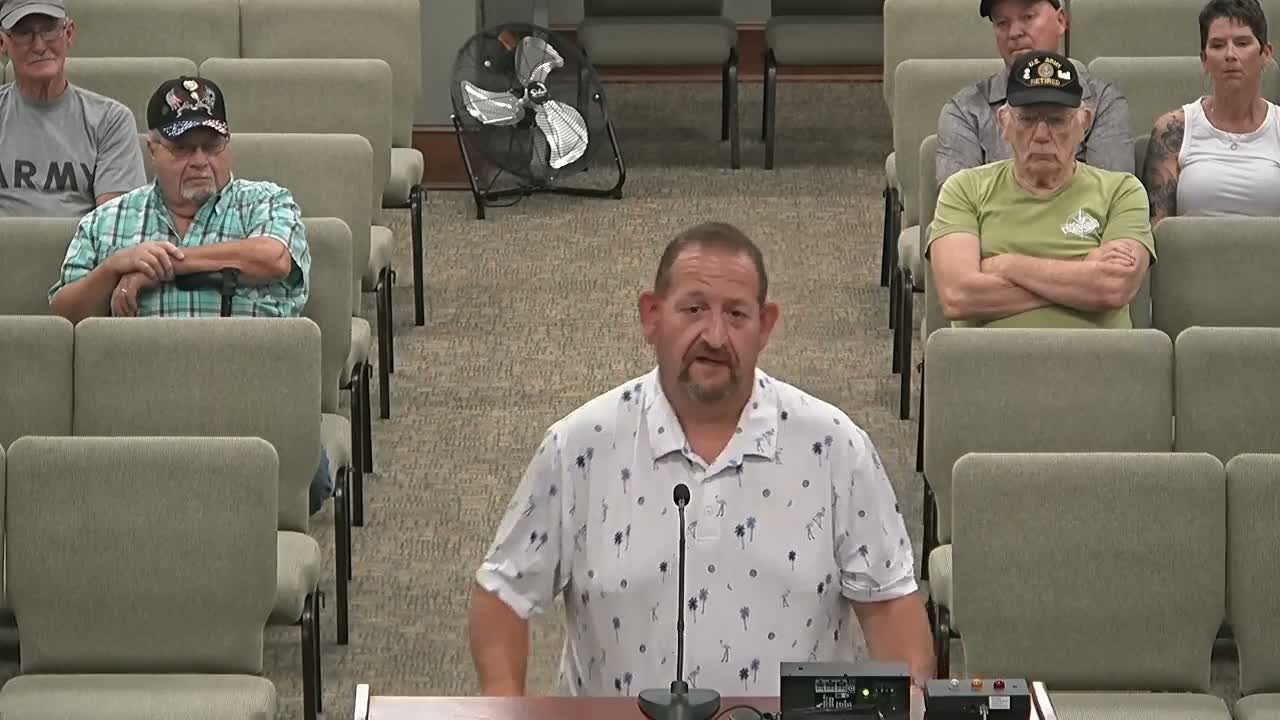
Travis Davenport, who identified himself as living at 13406 Chip Ridge Road, addressed the board during public comment and submitted two exhibit packets of photographs showing pavement deterioration and shoulder collapse. "I've already had a vehicle totaled because the road is too narrow," Davenport said, describing frequent large cattle‑trailer traffic, seasonal farm and agritourism vehicles, poor drainage and a blind intersection at Branch Street that he said has caused near‑misses and one personal collision. He said he had contacted the Virginia Department of Transportation and asked the board to help pursue road upgrades and needed culverts.
Later in the meeting, Eric McReynolds and a citizen team, including Paul Sturgill, introduced a proposal for a "People's Gulf War Memorial." Sturgill, identifying himself as "post commander of post 9830 in Damascus," described VFW Post 9830’s support and confirmed the group's plan to finance the memorial privately. Engineer Chris Perry of Carmack Enterprises described a minimal‑impact foundation option (about 2 feet by 3 feet, with an approximately 8‑foot maximum depth for footings) or a plaque inside the building. "We just passed the hat. It will not be coming off of the taxpayers whatsoever," McReynolds told the board in describing fundraising. The team said they have around $4,000 toward a quality interior plaque and offered donated labor for footing work if an in‑ground monument is approved.
Several supervisors encouraged the presenters to first coordinate with the county Veterans Memorial Board and Veterans Park stakeholders, noting limited space at the park and existing stewardship responsibilities. One supervisor noted that the Veterans Memorial Board had previously reported limited room at the park; others suggested the interior plaque—placed where many members of the public enter county offices—would be more visible and lower maintenance. The board expressed appreciation for the veterans’ initiative but did not make a formal commitment.
The meeting record shows the board typically routes such proposals through the Veterans Memorial Board and the county’s committee process before any county maintenance or formal approval would be considered.