Get Full Government Meeting Transcripts, Videos, & Alerts Forever!
Get email alerts on the Police Retirement topic
No spam. Unsubscribe anytime.
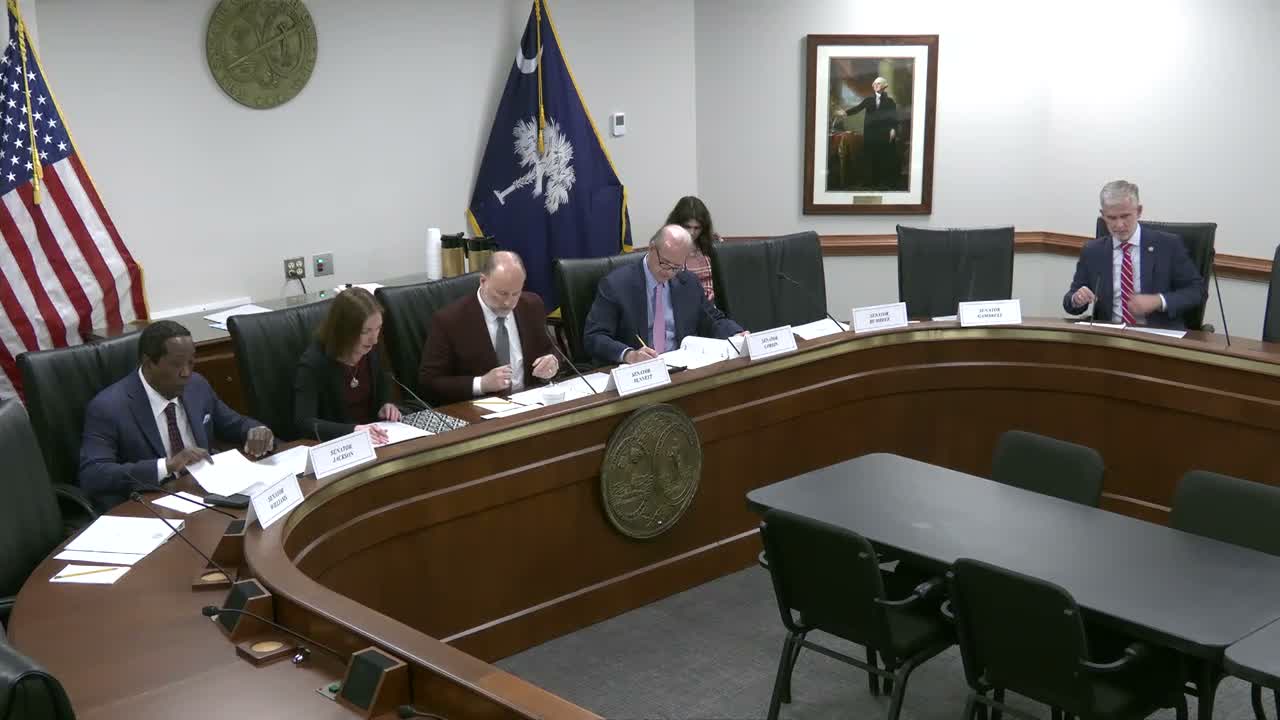
Subcommittee advances bill allowing Catawba Nation to join state police retirement system
Summary
The Retirement Subcommittee for Finance voted unanimously to give S.127 a favorable report after members heard that the Catawba Nation would waive sovereign immunity limited to retirement‑system disputes and that joining the system aims to help recruit and retain police officers.
The Retirement Subcommittee for Finance voted unanimously to advance S.127, a bill that would allow the Catawba Nation to join the state Police Officers Retirement System if the tribe applies to the board, meets statutory requirements and waives sovereign immunity for disputes arising from participation.
Olivia, a staff presenter, told the subcommittee: "This bill deals with the police officers retirement system. Section 1 of the bill adds the Catawba Nation upon its admission to the system to the definition of an employer for the police officers retirement system ..." She summarized that the tribe must apply under existing provisions in sections 9‑11‑40 and 9‑11‑43 and comply with board rules, and that the act would take effect on the governor's approval.
Sen. Johnson, sponsor of S.127, framed the proposal as a recruitment and retention measure. "Imagine if you can for a second living in an area that every time you hire law enforcement because you can't give them benefits ... another area immediately gobbles them up because they can offer these benefits," he said, adding that the tribe "is just simply asking to be allowed to join in so that they can attract and most importantly retain law enforcement."
Members asked detailed procedural and policy questions. A senator from Greenville asked about the tribe's size and land footprint; a Catawba Nation representative said the nation has about "4,200 members of the Catawba Nation as far as populous housed within the state of South Carolina" and offered to provide acreage. On the scope of the immunity waiver, the representative said the tribe agreed to a limited waiver "siloed in this venue of the law," meaning the waiver applies only to disputes arising from participation in the retirement system and the nation retains sovereign immunity outside of that context.
Justin Warner, general counsel at the Public Employee Benefit Authority (PEBA), described how membership would work if the nation joins. "This just allows them to join the system like any other municipality ... If either officers had prior time in the system, they would start adding to that old time. If they had no prior service, they would be starting whenever they decide to join the system under this," he said, summarizing standard vesting and buy‑back mechanics for prior service.
Committee members also asked about cross‑border operations: the Catawba representative said the tribe operates two Kings casinos in North Carolina, that most tribal members live in York, Lancaster and Chester counties in South Carolina, and that the tribe sometimes employs off‑duty county officers for casino security.
After discussion, the chair entertained a motion for a favorable report. The subcommittee took a voice vote; the chair announced: "Ayes have it, with Senator Gambrell and Senator Hembry who sent me their proxy unanimously, favorably report to the full committee." The subcommittee then adjourned.
What happens next: S.127 will go to the full committee for consideration. If approved there and by both chambers, the measure would take effect upon the governor's signature, and the Catawba Nation's admission would be subject to the retirement board's application requirements and rulemaking.