Get Full Government Meeting Transcripts, Videos, & Alerts Forever!
Get email alerts on the Police Retirement topic
No spam. Unsubscribe anytime.
Subcommittee advances bill allowing Catawba Nation police to join state retirement system
Summary
The Retirement Subcommittee for Finance gave S.127 a favorable report, moving a proposal that would let the Catawba Nation enroll its police officers in the state Police Officers Retirement System if the nation applies to the board, meets statutory and board requirements, and waives sovereign immunity for system-related disputes.
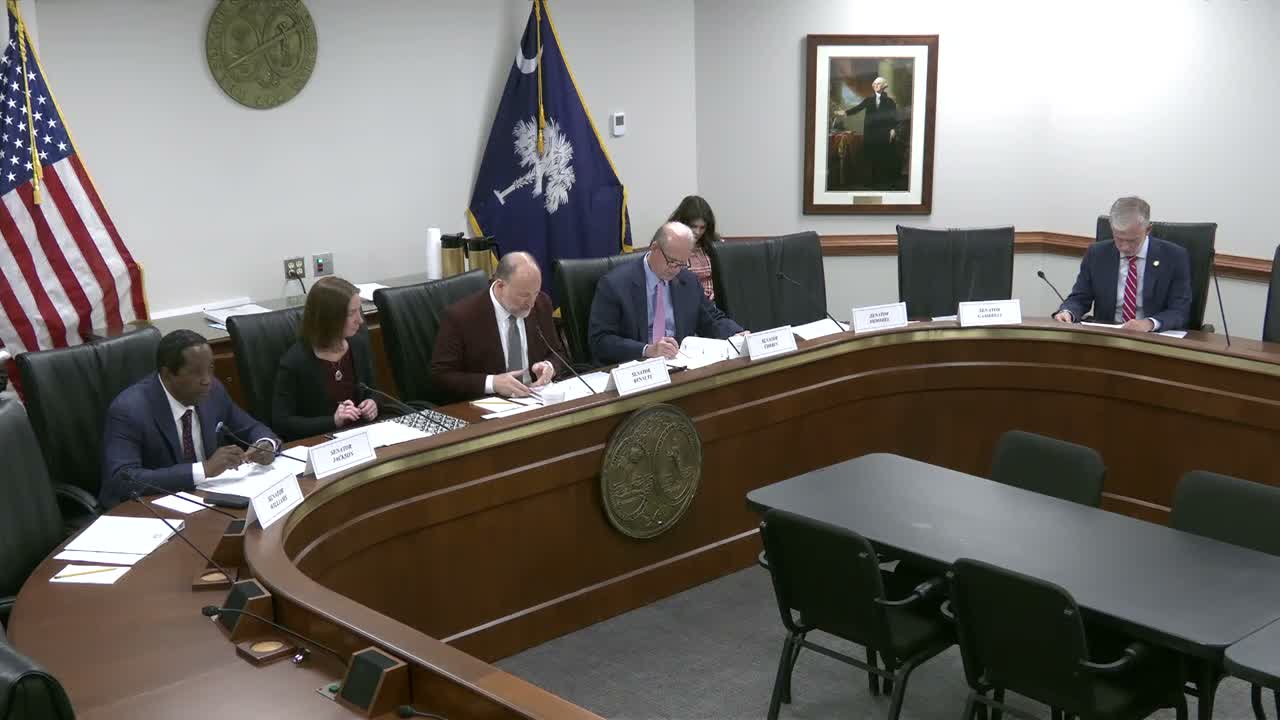
The Retirement Subcommittee for Finance on a procedural voice vote advanced S.127, a bill from Sen. Johnson that would allow the Catawba Nation to join the state Police Officers Retirement System if the nation applies to the board and meets statutory and board requirements.
Senator Johnson said the change is meant to help the Catawba Nation recruit and retain law enforcement officers. "Imagine if you can for a second living in an area that every time you hire law enforcement because you can't give them benefits, because you they can't get in any retirement system," Johnson said, urging the committee to move the bill.
Staff summarized the bill’s key provisions: Section 1 would add the Catawba Nation to the system's definition of "employer" under existing law cited as 9-11-43. Section 2 would set qualifying language and require the nation to apply under the procedures in 9-11-40, comply with board rules and regulations, specify a requested date of admission, and ensure employees seeking membership devote substantially all their time to governmental police service, referencing 27-16-70(c). The staff summary also said the nation must agree that disputes arising from participation in the system will be resolved in the state tribunal, effectively limiting sovereign immunity for matters tied to the retirement system. The act would take effect upon approval by the governor.
A Catawba Nation representative told the committee the nation has "4,200 members of the Catawba Nation as far as populous housed within the state of South Carolina," and described a smaller land footprint than some federally recognized tribes. The representative said the nation had negotiated the waiver narrowly and that it was a difficult concession: "We are a sovereign nation because we are federally recognized and we waived our sovereign immunity, which is a incredible hardship, for us to do in any venue."
Justin Warner, general counsel at PEBA, told the committee the nation would join and participate like any other municipality that elects to join the police officers system. "This just allows them to join the system like any other municipality in the state that maybe hasn't joined the police officer system before," Warner said. He added that prior service in the system would count for officers who had earlier state service, and that officers would begin accruing service from the nation's chosen admission date if the bill passes.
Committee members asked practical questions about size, jurisdiction and operations. The Catawba representative said the nation currently employs about three police officers (with a fourth expected to start) and operates two Kings casinos across the North Carolina border; the nation partners with local counties for off-duty officers at those facilities and has worked with the attorney general’s office on a human-trafficking initiative.
The chair entertained a motion for a favorable report to the full committee. The committee voted in favor, with the chair announcing: "Ayes have it, with Senator Gambrell and Senator Hembry who sent me their proxy unanimously, favorably report to the full committee." The bill now goes to the full committee; the act would take effect upon the governor's approval if it becomes law.
Provisions noted in committee include application requirements under 9-11-40, the employer-definition change under 9-11-43, the statutory citation regarding police service eligibility (27-16-70(c)), and the narrow waiver of sovereign immunity limited to matters arising from participation in the retirement system. Several committee members said they supported moving the bill forward while noting concerns about broader pension-system changes and fiscal impacts were not expected given the nation's small force.