Get Full Government Meeting Transcripts, Videos, & Alerts Forever!
Get email alerts on the Economic Development topic
No spam. Unsubscribe anytime.
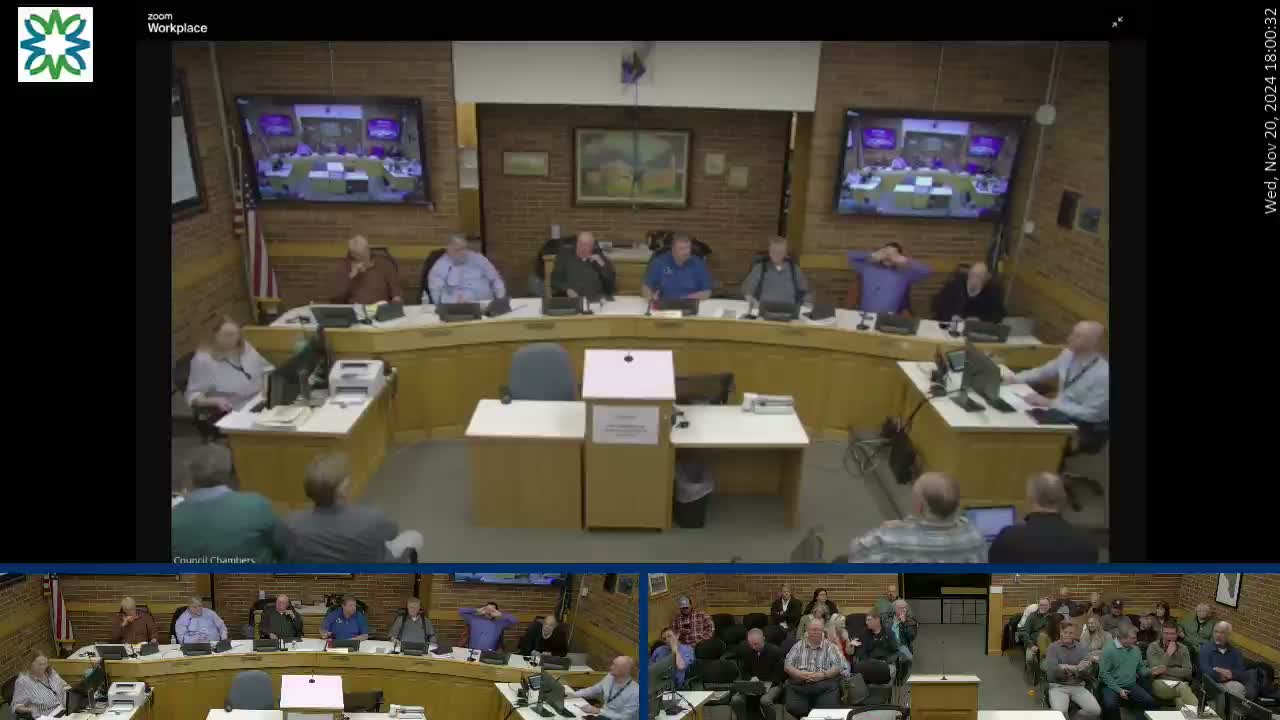
Wasatch County council deadlocks on joining Heber City downtown CRA after hour of public comment
Summary
After a lengthy presentation and a two-hour public hearing with divided testimony, the Wasatch County Council failed to adopt an interlocal to participate in Heber City's proposed downtown community reinvestment area (CRA); the vote was split and the measure did not pass.
Heber City sought Wasatch County's agreement to join a proposed downtown Community Reinvestment Area (CRA) that would divert a share of future property-tax growth in the downtown area to pay for public infrastructure and incentives. The county opened a public hearing after a presentation from Vernal's city manager, Quinn Benyon, who described Vernal's experience using CRA funds to bury utilities, add parking and grant façades. Benyon said Vernal leveraged about $2.1 million in CRA increment into roughly $24 million of public‑private investment and credited streetscape improvements and a 40% façade grant for attracting private projects.
County staff explained the likely structure of Heber's proposal: a term of about 20 years and a proposed 75/25 split of tax increment to the CRA and participating taxing entities (city/other partners). Supporters at the hearing — including local business owners and the county economic development director, Dalen Kosher — said the CRA could remove barriers (parking, buried utilities) that deter private investment and help small downtown businesses compete.
Opponents, including several Midway residents and long‑time property owners, warned that the CRA would divert funds that otherwise go to county services and the school district. Speakers warned that a 75% diversion of incremental taxes to a downtown redevelopment fund could create long‑term pressure on property taxpayers outside the CRA and urged caps, shorter terms or exclusion of school‑district revenue. Tara Morris and other residents said higher property taxes were already forcing vulnerable households to relocate and expressed concern about using school tax increments for downtown development.
After more than two dozen public comments, councilmembers debated the agreement's terms and the composition and powers of proposed advisory committees. Proponents emphasized the CRA's role as "seed" or incentive funding that can mobilize grants and private funds; critics noted the county would still have to fund statutory obligations and asked for stronger caps and clearer project lists.
A motion to approve county participation (with the changes discussed) was made and seconded. Roll call produced three votes in favor, three opposed and one abstention, leaving the motion without the required majority. The council did not approve the interlocal at this meeting. Councilmembers who opposed cited outstanding questions about fiscal impacts to the county and school district and said they wanted either further concessions from Heber City or separate school‑district approval before committing county tax increments. The school district decision on participation was noted as a separate, independent action.
Next steps: with no county approval, Heber City may continue local work and seek separate interlocal agreements. County leaders suggested further negotiations with Heber City and that staff return with clearer project definitions, possible caps and an implementation schedule if the parties want to revive the proposal.