Get Full Government Meeting Transcripts, Videos, & Alerts Forever!
Get email alerts on the Land Use Agriculture topic
No spam. Unsubscribe anytime.
Frederick County farmers urge local action to help keep farms viable amid rapid growth
Summary
Local farmers told the joint Extension leadership meeting that rapid population growth and proposed density changes threaten farm viability; they urged county help on land‑use, tax treatment and long‑term programs such as TDRs to prevent forced sales or subdivision.
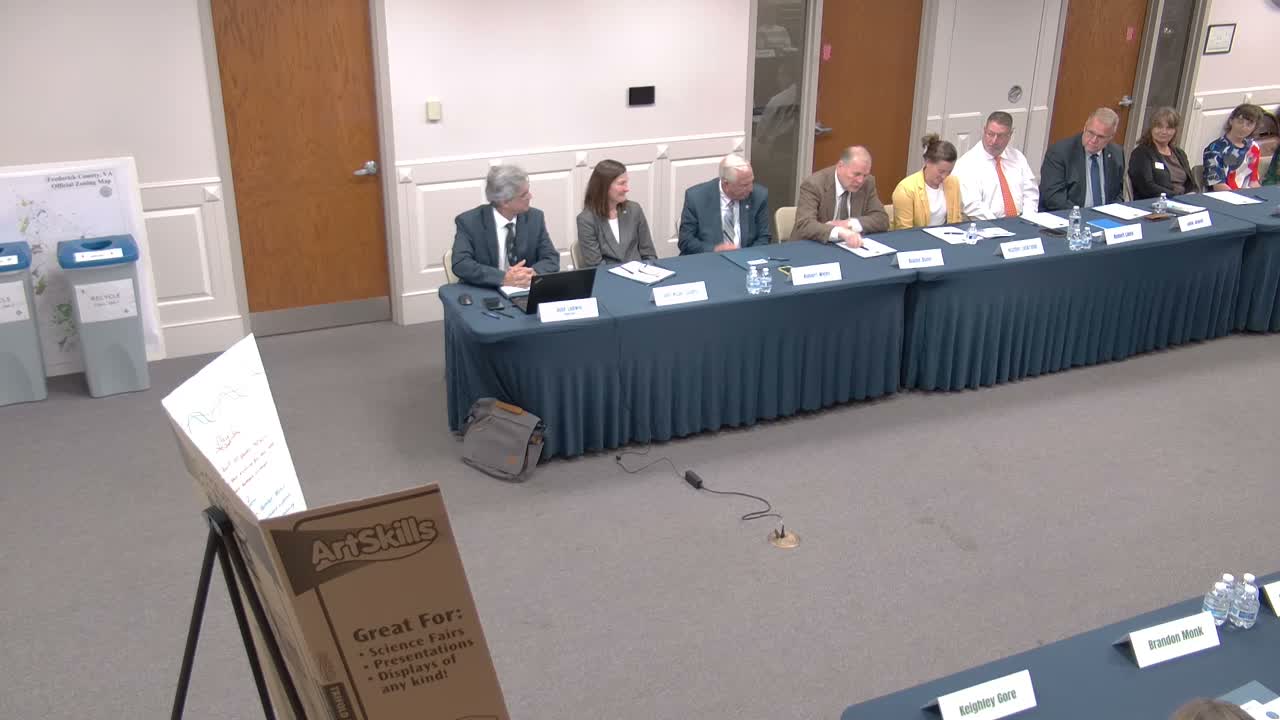
Farmers and landowners told county leaders and Extension staff that Frederick County’s rapid growth and periodic debate over density threaten family farming and that local policy choices could help sustain agriculture.
An unidentified board member opened the public exchange by citing population figures and asking what the county could do to support farmers as development expands. The speaker said the county’s population had increased from about 59,000 at one prior reference point to about 96,000 and projected another 30,000–40,000 residents in the next 20 years.
Farmers described multiple pressures: expanded traffic near fields, houses built close to orchards, and neighborhood concerns about spray operations. Kim Watt, who identified herself with Timber Ridge/Long Creek farms, stressed the perception gap between farmers and the public and noted that "farmers are less than 2 percent of the population," arguing that land‑use and tax policy decisions materially affect whether families stay in farming.
Speakers warned that repeated proposals to change allowed density create uncertainty and can devalue long‑term farm operations; they cited prior local debates and urged the county to consider incentives and mechanisms such as careful use of transfer‑of‑development‑rights (TDR) programs rather than rules that would force landowners to subdivide or sell.
County leaders said they share the objective of preserving rural character and suggested tools such as restricting sewer and water service areas and working with state and federal representatives to press broader policy issues that affect farmers. Extension staff reiterated they can connect producers to technical assistance and to federal and state partners for cost‑share and conservation programs.
The discussion closed without any formal policy change; participants asked for continued dialogue between farmers, Extension staff and the board about land‑use, taxation and technical support.