Get Full Government Meeting Transcripts, Videos, & Alerts Forever!
Get email alerts on the School Funding topic
No spam. Unsubscribe anytime.
Frederick County supervisors review capital fund, weigh $151M high school and tentatively set Oct. 23 public hearing
Summary
At a Sept. 18 work session, Frederick County supervisors reviewed budget projections and a $42.3 million capital fund balance, debated funding three school projects and a proposed fourth high school (high-end estimate $151M), and agreed to move a school-board resolution to a public hearing scheduled for Oct. 23 while requesting more multi-year revenue projections.
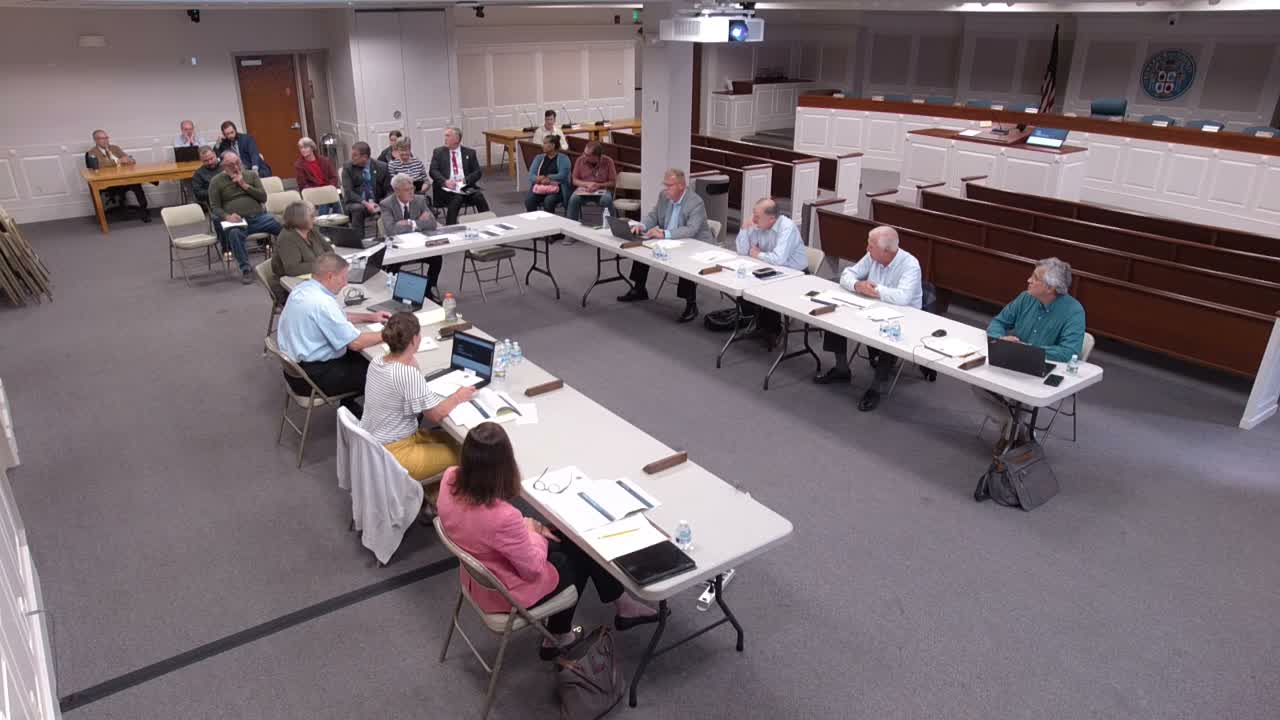
Frederick County supervisors spent much of a Sept. 18 work session reviewing the county's finances and debating how to pay for three near-term school projects and a possible fourth high school.
Mister Bolhofer, who presented the county's financial slides, told the board the session was informational and that staff would provide follow-up analysis rather than seek action at the meeting. He told the board the capital accounting shows a fund balance transfer of $42,300,000 expected this year and that county revenues from real property, personal property and sales taxes are the primary components of the general fund. "I've been looking at this for weeks and weeks," Bolhofer said as he summarized the budget book and audited figures. "I'm very conservative and I always want to make sure I underestimate that number."
Why it matters
Board members flagged two connected problems: several schools are over capacity now, and capital costs have risen sharply. Staff presented enrollment and capacity numbers that show multiple schools above 100% capacity and overall system pressure. At the same time, the county faces multi-year budget choices: whether to use capital reserves, borrow, or pursue new revenue sources such as a dedicated sales tax, meals tax changes or other levies.
What was presented
Bolhofer walked the board through historical rollovers, explaining his conservative $12 million rollover assumption and contrasting it with other board members' estimates of about $16 million. He also reviewed debt-service projections showing a multiyear increase if the county borrows to pay for the capital projects. He estimated the county's current cost of borrowing at roughly 4.5% and said the county's 2024 average investment return was about 5.4%; both rates affect how quickly the capital fund will grow or shrink.
Board members and staff listed program costs and options. Staff presented a range of project estimates: five near-term projects totaling roughly $140 million to $165 million and longer-run needs that can exceed $300 million to $500 million depending on options taken. For the fourth high school specifically, the presentation cited an upper-range figure near $151 million and noted that soft costs (equipment, technology and furnishings) can add materially to the building price.
Funding options discussed
Supervisors discussed multiple revenue options. Among those mentioned: a 1% additional sales tax dedicated to schools (staff cited a state estimate that could raise about $20 million), a 2'¢ meals tax adjustment (roughly $1.8 million), a county cigarette tax (Bolhofer offered a conservative $2.0'$2.3 million estimate at $0.50 per pack), and impact fees (which would likely require action by the General Assembly or regional coordination). Bolhofer noted implementation details and administrative costs vary: "The cigarette tax is somewhat cumbersome," he said, and impact fees "would require obviously the state to take some action."
Board debate and next steps
Supervisors split over timing and the degree of analysis needed before committing to a public vote. Some supervisors urged moving the school-board resolution forward to a public hearing quickly to avoid further cost escalation; others said they would not ask the public to weigh in until staff produced clearer multiyear revenue and debt-service projections that show the tax or service impacts to residents.
Ultimately the board asked staff to prepare additional value-engineering and revenue scenarios and the county provided a tentative public hearing date of Oct. 23, 2024, if scheduling and advertising deadlines permit. Several supervisors stressed the decision will be made over multiple budget years and asked for a multi-year projection of operating and debt costs that would follow any new school construction.
The board also asked staff for a short report tying assessments, rollbacks and tax rates together after questions about 2021 and 2023 assessment increases and corresponding revenue movements.
What remains unsettled
Supervisors asked staff to return with clearer projections of:
- Multi-year revenue forecasts and rollover sensitivity (12M vs 16M assumptions). - A breakdown of hard and soft costs for the proposed projects and value-engineering opportunities. - Potential revenue scenarios for a 1% sales tax, meals tax adjustments, cigarette tax administration costs and impact fee feasibility, including which options would require General Assembly action.
The board did not take a final vote on borrowing or tax changes at the session. The meeting adjourned with staff and supervisors agreeing to pursue the follow-up analysis and, where appropriate, schedule a public hearing in late October.
Ending
County staff will circulate the corrected projection charts and the report on rollbacks and tax rates; supervisors asked to receive value-engineering information and multi-year revenue models ahead of the public hearing process.