Get email alerts on the Land Use Cemeteries topic
No spam. Unsubscribe anytime.
Planning commission recommends permit for Little Georgetown Cemetery expansion
Summary
The commission recommended approval of a Category 22 special permit to expand Little Georgetown Cemetery by 9.4 acres for about 2,800 burial plots with conditions on setbacks, screening and a required site plan.
The Planning Commission recommended approval of a Category 22 special permit to expand the Little Georgetown Cemetery by roughly 9.4 acres, adding an estimated 2,800 burial plots, after staff and the applicant described plans to preserve the site's historic character and manage stormwater and access.
Staff outlined that the cemetery expansion would be limited to the existing cemetery parcels and the proposed expansion parcel; new graves would meet standard setbacks and the expansion parcel would be accessed from Trap Branch Road, with connections to existing gravel drives. Staff noted the property and surrounding area are in the Broad Run Little Georgetown Rural Historic District listed on the National Register of Historic Places.
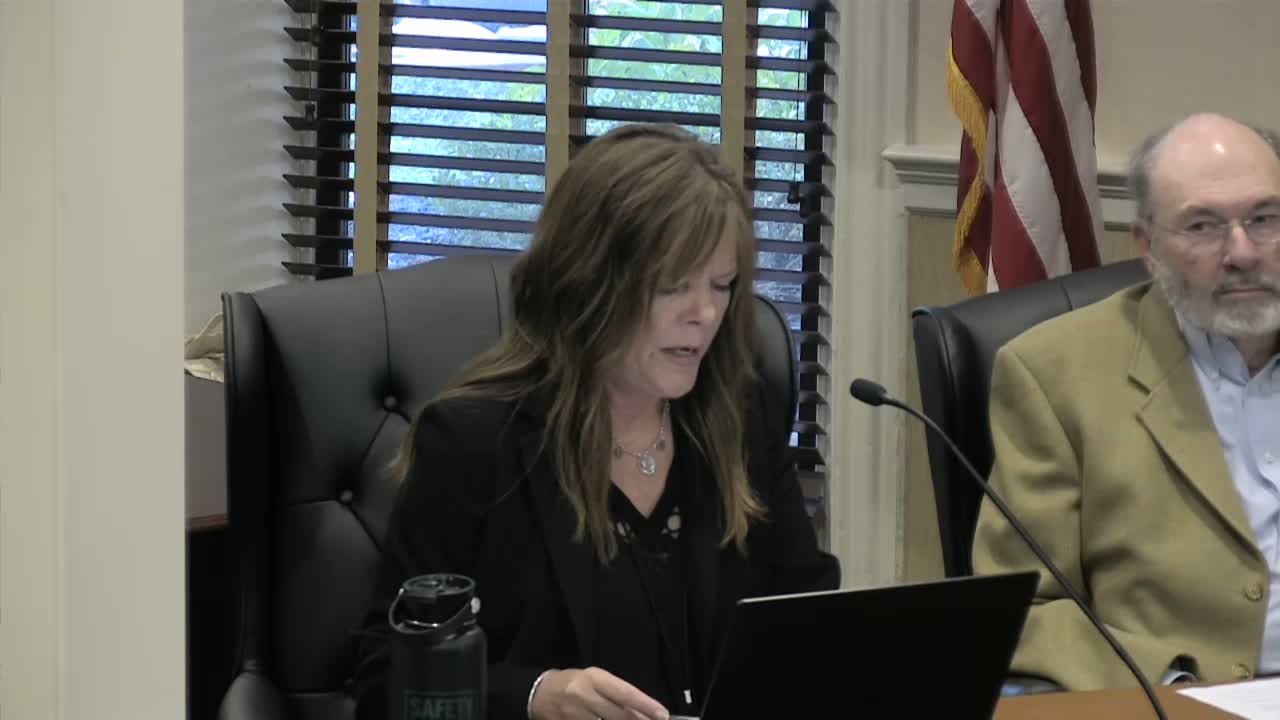
Leslie Conroy, representing the applicant’s landscape architect, described measures to maintain rolling topography, use historic materials (stone walls, gravel drives), increase vegetation and add stormwater management to minimize impacts. An adjacent resident said neighbors would support a conservation easement but would oppose development.
After the public hearing the commission voted to forward the special permit to the Board of Supervisors with the staff‑recommended conditions (amended earlier that day to remove a right‑of‑way dedication condition pending further work between staff and the Board).
AI generated
The text on this page is AI generated. Summaries, highlights, analysis, and video transcripts are all produced from the original source material.
AI can make mistakes, so if you spot one, and we will fix it for everyone.
Note: the source content is unaltered by us. Any content source we link to, be it a video, an audio recording, or a document, is presented exactly as its publisher released it. That publisher is usually a government body, sometimes an individual official or another organisation.