Get Full Government Meeting Transcripts, Videos, & Alerts Forever!
Get email alerts on the Economic Opportunity Reserve topic
No spam. Unsubscribe anytime.
Ten-year review: Fairfax County outlines how Economic Opportunity Reserve has been used
Summary
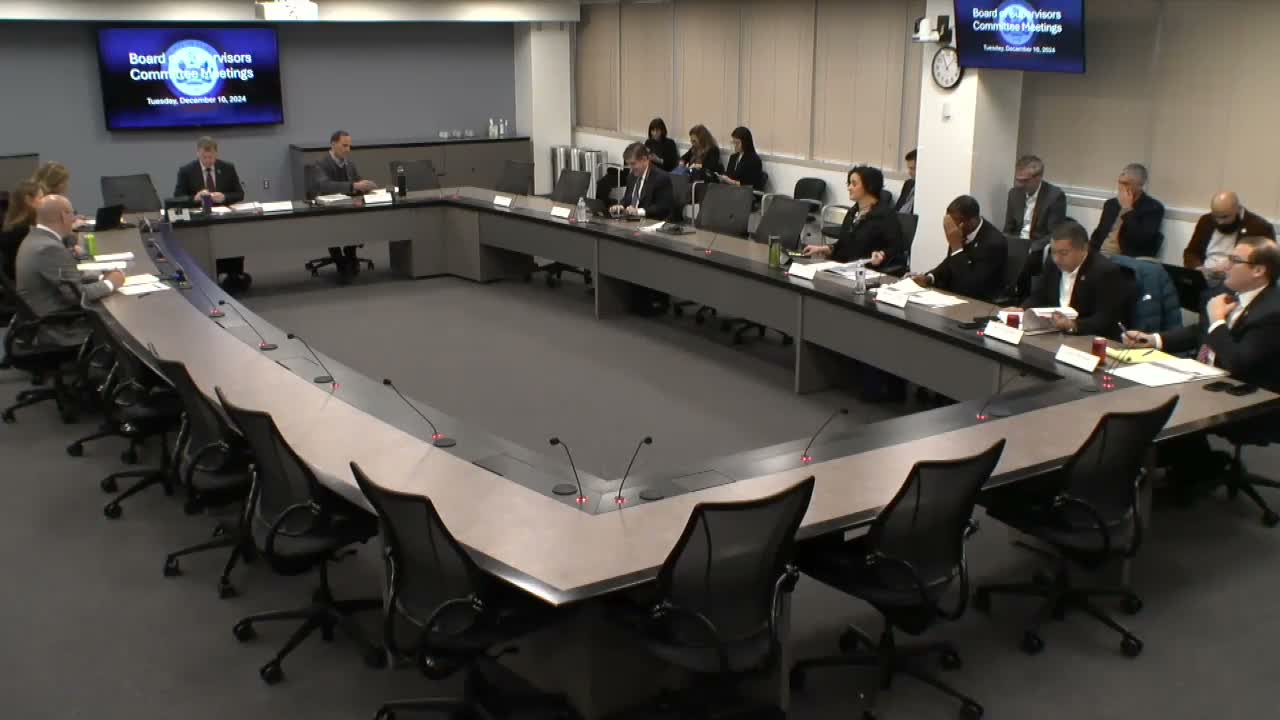
Staff told the Economic Initiatives Committee the Economic Opportunity Reserve totals about $56.5 million and has supported 17 approved projects over nine years, including small-business microloans, placemaking, and innovation-focused programs; members requested clearer ROI and district-level data.
Fairfax County staff presented a 10-year review of the Economic Opportunity Reserve (EOR) to the Economic Initiatives Committee, tracing its origin to a 2015 revision of the Board's financial principles and explaining how the reserve has been used for pilot projects, small-business support, placemaking and innovation initiatives. "The total funding for the economic opportunity reserve is about $56,500,000," Scott Sizer, deputy director for the Department of Economic Initiatives, said during the presentation.
Why it matters: the EOR is a county-designated 1% set-aside of general fund disbursements intended for one-time investments that pilot programs or catalyze economic growth. The committee heard that 17 projects have been approved since the fund began operating and that a single $6,200,000 allocation for a Downtown Herndon project is the largest line item in the portfolio; staff noted those Herndon funds have not yet been expended.
Staff described four investment categories used to evaluate proposals: capital development, programming support, a COVID-19 mitigation program, and property acquisition. Sizer said capital development represents the largest share of approved projects by value and count, while no EOR-funded property-acquisition projects have been approved to date. The EOR was described as intentionally structured for one-time investments, not ongoing operational funding. "The Economic Opportunity Reserve was not intended to fund ongoing program[s]," Sizer said.
The committee discussed a COVID-era microloan program created in April 2020 to help small businesses: staff reported an initial $1.2 million in 0%-interest principal loans went to 64 businesses and that about $325,000 has been revolved back into a revolving fund now operated in partnership with Community Business Partnerships; repayments and interest are returned to the revolving fund to provide future loans. Members asked for follow-up performance data (repayment rates) and for survey information on how loan recipients have fared since receiving assistance.
Board members also asked staff to supply clearer return-on-investment metrics that rank projects by job creation, square footage generated, tax or revenue impacts and other measurable outcomes. Supervisor Lask asked whether the Innovation Hub "$1,560,000,000" capital-raised figure includes investment obtained after county support; staff said the number primarily reflects capital raised by businesses that had either been supported through the county program or had since grown after leaving the program. Staff offered to coordinate follow-up surveys and additional performance metrics with Community Business Partnerships and the Economic Development Authority.
No formal committee action on EOR policy changes was taken at the meeting. Committee members thanked staff for the retrospective and asked for more granular and comparable measures to inform future funding prioritization.