Get Full Government Meeting Transcripts, Videos, & Alerts Forever!
Get email alerts on the Public Transit Funding topic
No spam. Unsubscribe anytime.
COG’s DMV Moves outlines options to shore up Metro funding; Fairfax officials briefed on regional task force and possible savings
Summary
COG staff said the DMV Moves regional task force is assessing long‑term Metro funding needs and operational efficiencies, estimating the region may need $600–1,000 million starting in FY28 and proposing reforms across fares, shared services, wayfinding, bus priority, procurement and audits.
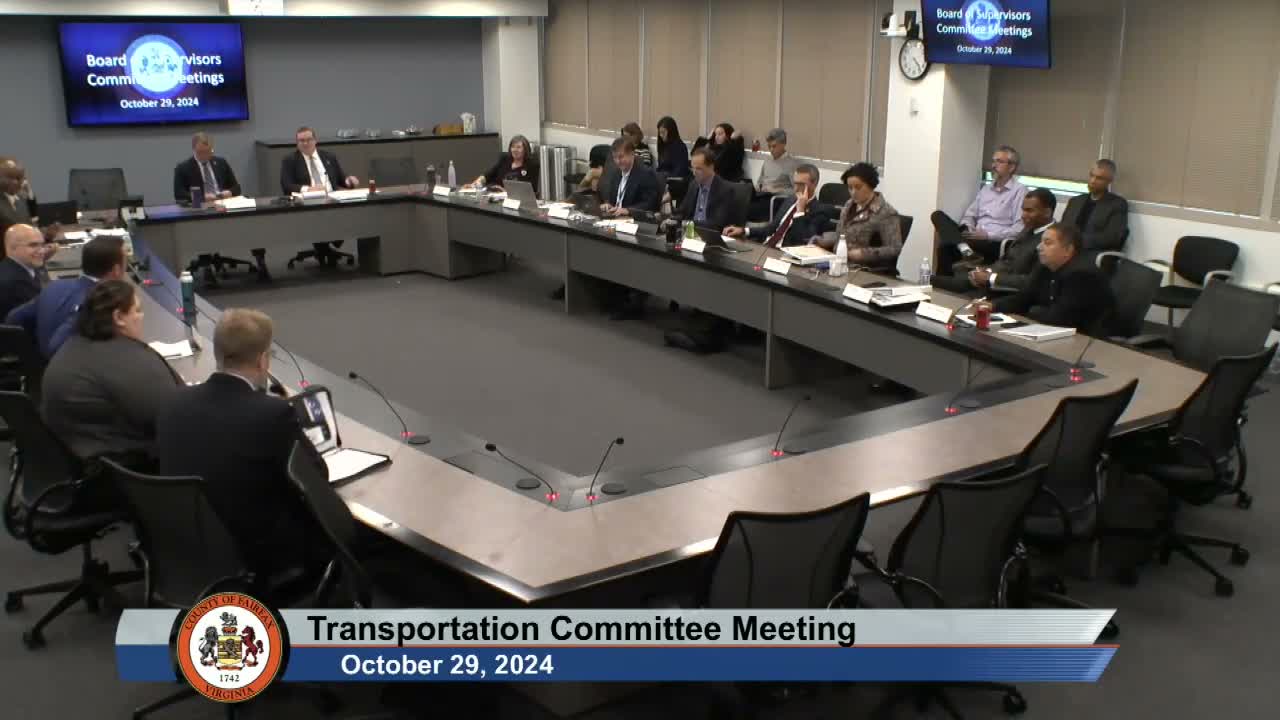
Christopher Clark Mercer (COG) told Fairfax County supervisors that DMV Moves — a regional task force created to address long‑term Metro and transit funding and coordination — will pursue actionable recommendations to close an impending funding gap and improve operational efficiency.
Mercer said the work includes two coordinated groups: a Community Partners group (chaired by Jack McDougall of the Board of Trade) bringing business, labor and rider advocates to the table, and a Government Partners group led by regional chief administrative officers to align jurisdictional fiscal and operational priorities. He said the region must look beyond Metro to include multiple bus operators, VRE and other services in pursuit of a comprehensive approach.
On the funding front, Mercer gave a rough order‑of‑magnitude estimate that the region could need between $600–700 million and up to $1 billion starting in FY 2028 to sustain the current Metro service level. He emphasized that operational and capital efficiencies alone will not close the entire shortfall but that reforms can make the system more efficient and create confidence if additional funding is requested from jurisdictions.
DMV Moves will examine six categories for improvement: aligning regional fare policies and discounts; adopting shared‑service guidelines and performance measures; improving wayfinding and user information; pursuing selective bus priority treatments on high‑ridership corridors; consolidating procurement and depot/maintenance efficiencies; and harmonizing training/certification and audit processes to reduce duplication. Mercer urged transparency and robust data sharing from Metro to support these analyses.
Mercer said the task force will discuss capital financing in November and operating solutions in December. He flagged a contentious regional question — how to interpret Metro’s 3% annual escalator and whether an indexing or cap should be applied — as a high‑priority operating issue for the December workstream. No formal funding commitments were requested of the Fairfax board at the meeting; Mercer invited supervisors to send questions to staff and to participate in task‑force work as needed.