Get Full Government Meeting Transcripts, Videos, & Alerts Forever!
Get email alerts on the 911 Modernization topic
No spam. Unsubscribe anytime.
Fairfax County to pilot AI‑supported system to triage non‑emergency calls while preserving live 911 service
Summary
Fairfax County’s Department of Public Safety Communications outlined plans to use AI to triage non‑emergency calls, translate languages, route callers to the right agency and expand backup/remote operations, while preserving immediate live assistance for true 911 emergencies.
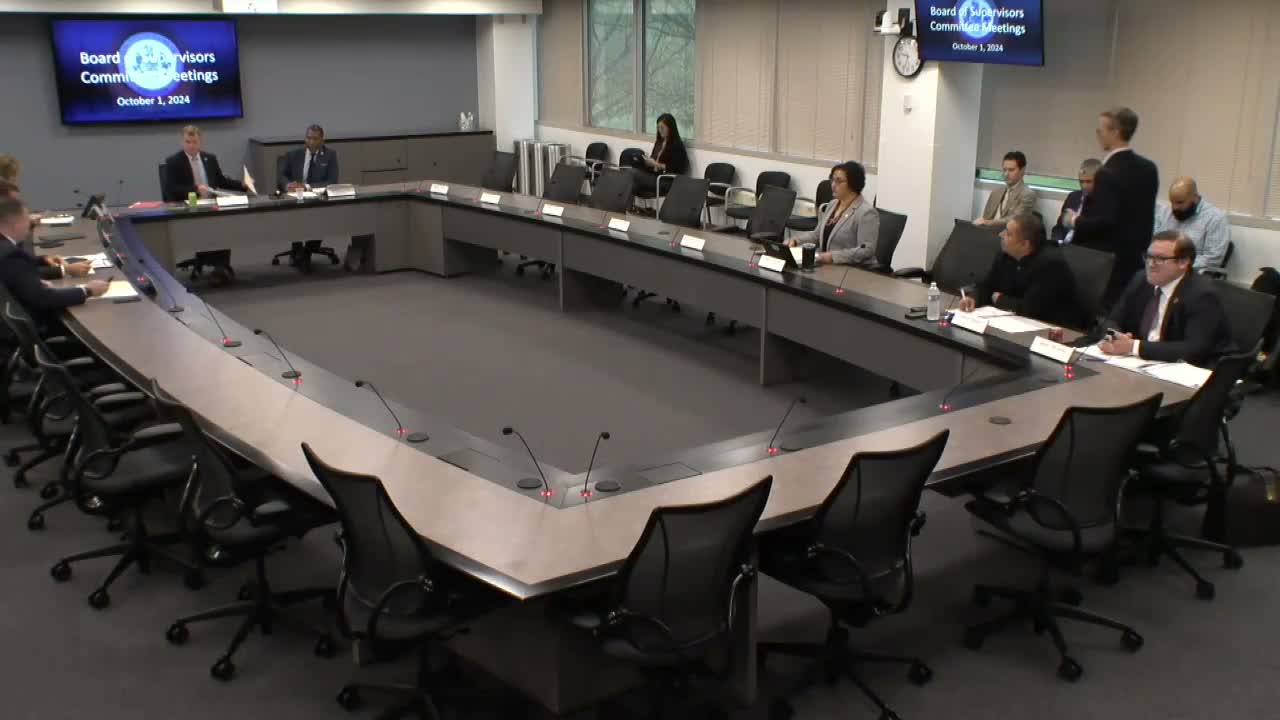
Fairfax County officials on Oct. 1 heard that the county’s 9‑1‑1 center will begin using AI‑supported technology to handle the surge of non‑emergency calls while ensuring emergency calls continue to connect to live call‑takers.
"911 is the most significant social contract of our lifetime," said Scott Brillman, director of the Fairfax County Department of Public Safety Communications, as he described the county’s plan to adopt automation for lower‑priority calls. Brillman told supervisors the center now receives more non‑emergency than emergency calls and that routing and translation automation can reduce hold times and COVID‑era operational strain on staff.
Brillman said the new system would present non‑emergency callers with an AI voice that can immediately translate more than 70 languages in text exchanges, triage the caller to the right local agency (for example, DPW or DOT), provide phone numbers or website links and, when appropriate, send a link so a resident can submit details without waiting on hold. "There will definitely be an option in the beginning to talk to a person immediately if they need to," he added.
The county plans a closed, agency‑crafted AI deployment rather than an open, free‑form model; Brillman said responses will be developed with agencies to avoid conversational paths that lead nowhere. He also said the system will be able to ingest device data (vehicle telematics, wearables) and use AI to help quality assurance, expanding review of calls from about 1% under human QA to roughly 90%.
Brillman described other modernization steps: replacing manual tow‑fax workflows that generate about 40,000 tow records a year, creating a regional backup‑center model with neighboring jurisdictions to promote interoperability and resiliency, and enabling two‑way multimedia (texts, photos, video) as part of next‑generation 911 functionality being deployed alongside platform changes such as iOS updates.
Supervisors raised operational questions during a board Q&A, including whether callers opting for a live operator will be shown estimated wait times, how the system will fall back to interpreters if automated translation fails, and how to gather community feedback. Brillman said wait‑time indicators could be added, the platform will allow callers to request a live operator immediately, and the county can deploy surveys and other feedback tools once the system is live.
Board members also discussed outage and continuity planning after recent national telecom outages. Brillman said Fairfax has built network routing and continuity tools (an "EzzyNet"‑style interconnect) that allow calls to be rerouted, but added a regional backup center and remote/telework options provide additional resiliency when physical sites lose power, flood or must evacuate.
Next steps: Brillman said the county will continue vendor and DIT security work, coordinate public messaging with OPA and regional partners, and begin phased implementation that preserves immediate access to live help for true emergencies while shifting routine, non‑urgent interactions to automated paths.