Get Full Government Meeting Transcripts, Videos, & Alerts Forever!
Get email alerts on the Telecommunications National Quiet Zone topic
No spam. Unsubscribe anytime.
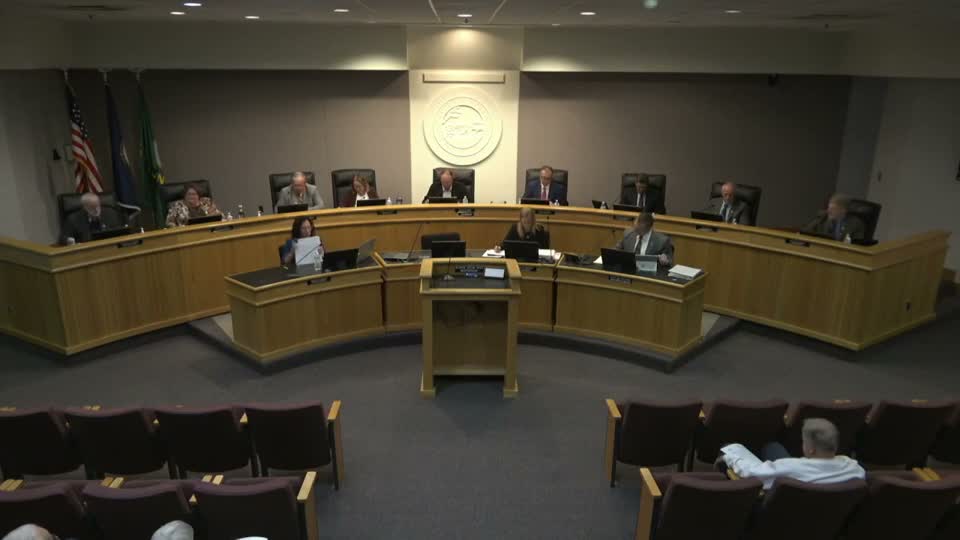
Augusta County board debates, then approves, National Quiet Zone resolution after dispute over cost estimates
Summary
After a lengthy debate over whether the National Quiet Zone imposes uncompensated costs on local taxpayers and public-safety radio design, the Augusta County Board of Supervisors approved a resolution urging federal review and possible modification of the Quiet Zone by a 5–2 vote.
The Augusta County Board of Supervisors voted 5–2 on Oct. 23 to approve a resolution calling for federal review and possible modification of the National Quiet Zone, after more than three hours of meeting discussion and public staff briefings.
The resolution, removed from the consent agenda for separate discussion, prompted extended questioning from several supervisors who said the item lacked a clear estimate of the financial impact on county taxpayers. Supervisor Seaton said he could not support a resolution that “recommends dissolution of the National Quiet Zone” without data showing how much it costs county taxpayers, and called for numbers on how residents or the county might need to upgrade equipment to comply. He urged staff to obtain cost estimates or study data before asking the federal government to act.
County staff and vendor representatives responded that the county’s new radio system design accounts for the Quiet Zone and that the private vendor Harris is designing coverage to meet contract guarantees. Dr. Seaton (county/vendor representative) explained that Green Bank approvals for specific equipment plans would come late in the project and that the county’s design intentionally assumes the Quiet Zone’s constraints. Staff said some neighboring localities that are nearer Green Bank have needed additional tower sites, but Augusta County’s contract coverage target can be met with the sites already planned; the issue is signal power levels in certain areas.
Supporters of the resolution argued the measure seeks only to notify federal authorities of operational constraints and to press for modifications or reimbursement where the Quiet Zone imposes additional costs. One supervisor characterized the resolution as an effort to keep pressure on federal authorities and to record local concerns about limits on signal strength affecting public-safety communications.
A motion to table the resolution failed 4–3; the board then voted to approve the original resolution 5–2. The meeting record shows multiple supervisors asking staff to seek quantifiable cost estimates (including data Pendleton County obtained under a grant) so future versions of the resolution could be strengthened with numbers.
The board did not direct immediate federal outreach beyond the resolution; staff noted that any formal federal correspondence or requests for reimbursement would depend on further information and possible changes to the resolution’s wording.
Next steps: staff indicated they would continue coordinating with the radio vendor and could return with amended resolution language or additional cost detail if the board requests it.