Get Full Government Meeting Transcripts, Videos, & Alerts Forever!
Get email alerts on the Sports Tourism topic
No spam. Unsubscribe anytime.
Franklin County fiscal court votes to create Sports Tourism Commission after months of debate
Summary
After public testimony and hours of debate, the Franklin County Fiscal Court approved ordinances that establish a separate Franklin County Sports Tourism Commission and update transient room tax procedures; the court amended the measures to delay their effect until July 1, 2025, and removed language that would have allowed the county to'request funds directly from the new commission.
The Franklin County Fiscal Court approved ordinances on Dec. 19 to withdraw the county from the joint tourist and convention commission and create a separate Franklin County Sports Tourism Commission, a move supporters say will help recruit tournaments and expand overnight stays but that critics warned could disrupt existing tourism funding.
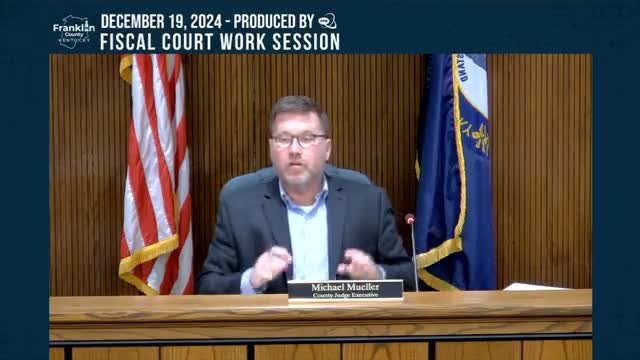
Judge Miller introduced the item and said the court would set the commission's start date for July 1, 2025, to give officials and stakeholders time to complete required interlocal agreements and memoranda of understanding. "That will give everybody time," the judge said, asking that the court proceed with passage while postponing the tax collection start date.
Public commenters pressed the court from both sides. "We don't have a clear answer on how we will be made whole, how our funding will be made up," Robin Antonucci, executive director of the Frankfort-Franklin County Tourist Commission, told the court, and she urged members to "table this issue or delay your vote on these ordinances" because of unresolved details and contracts she said could be jeopardized. Downtown Frankfort Incorporated executive director Susie Hosley said preserving a whole tourism office is critical to downtown events and marketing.
Proponents, including magistrates who ran on building a sports park and supporters of the county's park master plan, said the change is the first step toward implementing a long-planned sports tourism strategy. "This is one more tool we put in our box that helps us make everything more whole," one supporter said during the discussion, noting consultant projections that well-run sports complexes can generate sustained economic activity for hotels, restaurants and shops.
Court members debated whether to table the ordinances to allow more public outreach and to finalize two companion documents (an interlocal agreement with the city and an MOU). A motion to table was made and seconded and set for a formal vote in the voting session; that tabling motion failed.
In the voting session the court adopted the transient room tax ordinance updating collection and enforcement procedures and a companion ordinance establishing the Franklin County Sports Tourism Commission as amended. The approved amendments remove repeated language permitting the county to "request funds" directly from the commission and set the effective date for the tax and related changes to July 1, 2025, rather than the earlier January date that had been in the drafts.
Supporters said the July effective date provides a practical transition period: it lets the new commission be formed, allows appointments under Kentucky statute to proceed, and gives time to complete the interlocal agreement and MOU. Opponents said they wanted more public meetings and clearer technical answers about staffing, how tourism would be made financially whole during a multi-year transition, and whether the change would create unnecessary redundancy.
The court emphasized it could rescind the ordinance before it takes effect if the working-group process identifies problems. Judge Miller and several members stressed the action simply starts the administration, appointment and planning steps; funding allocations and any expenditures remain subject to later decisions and the companion documents that must be completed before the tax takes effect.
The court scheduled additional oversight and reporting steps and encouraged continued engagement with the current tourism office, the city and local stakeholders as the commission is formed.