Get Full Government Meeting Transcripts, Videos, & Alerts Forever!
Get email alerts on the Economic Development topic
No spam. Unsubscribe anytime.
Franklin County Fiscal Court approves interlocal agreement to pursue Keaton Lane industrial authority amid strong public opposition
Summary
After extended public comment and a multi-hour legal review, Franklin County Fiscal Court voted to approve a resolution authorizing an interlocal agreement to form the Keaton Lane Industrial Development Authority so the region can apply for a PDI grant; residents warned of loss of farmland, water and process transparency.
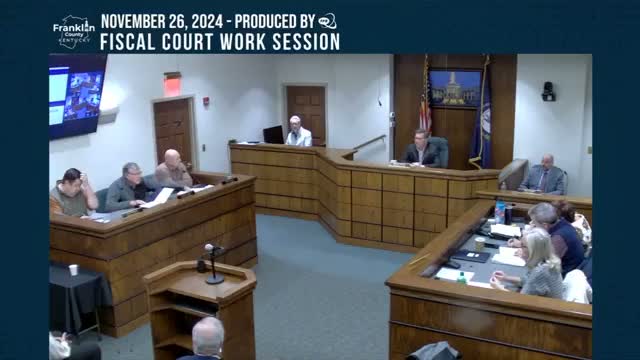
Frankfort — Franklin County Fiscal Court approved a resolution on Nov. 26 authorizing an interlocal agreement to create the Keaton Lane Industrial Development Authority, a regional body the county and neighboring jurisdictions say is required to apply for state industrial site grants.
The vote followed more than two hours of public comment and a lengthy question-and-answer session with county counsel Gil Johnson, economic development staff and magistrates. Dozens of residents urged the court to stop the proposal, citing transparency, local control and environmental risks; others argued the region needs jobs and tax revenue to fund public services.
"Rushing forward now will only compound the damage," said John Carlton during public comment, arguing the comprehensive-plan process had repeatedly rejected the site and warning of potential Open Meetings Act issues. Several residents and neighborhood representatives described farms and homes immediately adjacent to the mapped site and raised concerns about water, light pollution and the loss of topsoil. "Please take a deep breath of humility," said Trina Schimler.
County attorney Gil Johnson repeatedly described the interlocal as a procedural step that would allow a multi-jurisdictional authority to apply for a PDI (site development) grant. "All of this does is approve an interlocal agreement that allows you to take the next step forward," Johnson told the court, adding that the agreement does not itself authorize construction or make appropriations for projects.
Key features and checks laid out during the hearing included:
- Scope and boundary: the legal description in the draft covers an initial set of parcels (the attorney said it reflected roughly 105 acres in the first submission) and the interlocal permits contiguous expansion; county economic development staff said the Kentucky cabinet typically recommends assembling roughly 350 acres to be competitive for larger site grants.
- Fiscal authority and appropriations: Johnson emphasized the resolution does not appropriate funds. Any future spending by the authority would require subsequent appropriations by the participating governments.
- Governance: the draft authority board was discussed as a multi-member body (statutory minimums and maximums allow six to eight members); appointments would be made by each participating jurisdiction and terms would be staggered per the draft.
- Incentives and revenues: draft language calls for a "host fee" and revenue-sharing mechanics; Johnson said any tax incentives or ad valorem/TIF arrangements would require separate approvals by the affected taxing bodies.
- Eminent domain and limits: counsel and other legal staff cited Kentucky law limiting the use of condemnation for private economic development; the attorney said the statute the court referenced restricts condemnation used only to transfer property to private entities for the sole purpose of increasing tax base.
Magistrates expressed differing views. Several voted yes, saying the agreement creates a mechanism to compete for state funds that could bring jobs and revenue. Others, while sympathetic to economic development, voted no or expressed concern about process, naming the lack of time to review late changes and the need to tie site decisions to the county's comprehensive plan.
The court adopted the interlocal-resolution in a voice/roll-call vote and approved a number of related routine items, including procurement awards and consultant engagements. County staff and economic-development partners said the interlocal and a separate resolution naming Franklin County as the grant grantee would be filed with the Department for Local Government and the Kentucky Economic Development cabinet as the next step.
What happens next: With the interlocal approved, county staff said the authority can finalize grant paperwork, but any specific land acquisitions, rezonings, incentives or appropriations will require separate approvals. Several magistrates said they intend to use their seats on the authority and future review processes to press for stronger guardrails and greater transparency.
The court completed a roll-call and moved on to other business, including a quarterly jail update, Safe Streets grant approval for a traffic-safety plan and several procurement items. The interlocal vote passed during the session; opponents signaled they would continue to press for transparency and controls as the process moves forward.