Get Full Government Meeting Transcripts, Videos, & Alerts Forever!
Get email alerts on the Youth Services topic
No spam. Unsubscribe anytime.
Frankfort presenters urge expanded youth supports; opioid-abatement funding fuels a new county-ASAP partnership
Summary
Speakers from Thornhill Education Center, the Wanda Joyce Robinson Foundation and ASAP described rapid growth in education and youth-mentoring programs and urged the fiscal court to support a Boys & Girls Club and build a recovery-and-reentry coordination position funded through opioid-abatement grants and local match.
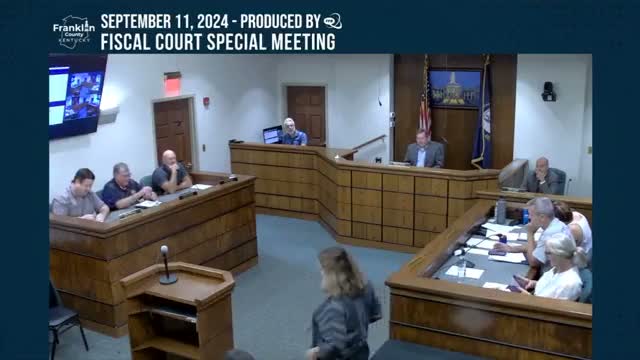
Multiple nonprofits and program leaders told the Franklin County Fiscal Court on Sept. 11 that local youth programs have expanded quickly and need more sustained county support to scale prevention and reentry services.
Kelly Anderson, executive director of Thornhill Education Center, described expanded GED and ESL classes (including jail-based instruction), family literacy work and an innovation center grant to start a youth drone-certification program. "We are here to make things better for the people of Franklin County and of Frankfort," Anderson said, noting partnerships with Kentucky State University and other local organizations.
Amy Snow (presenting programs run with the Wanda Joyce Robinson Foundation) summarized two years of grant-funded work supported by the Office of Juvenile Justice and Delinquency Prevention and other grants. She said the program is working with hundreds of youth affected by parental incarceration and has built mentoring matches, parenting classes in the jail and a reentry support program. "We have more than 800 children in Frankfort impacted by incarceration," she said, and called for the court—s help to establish a Boys & Girls Club in Frankfort to give kids after-school supports.
Charlie Kendall, board coordinator for the county—s Agency for Substance Abuse Policy (ASAP), described opioid-abatement funding the county and partner organizations received and proposed a memorandum of agreement to create a county-based position to coordinate recovery, reentry and prevention services. Kendall said some opioid-abatement grants provide funding streams for 15 years and argued that a permanent county-funded coordinator, initially supported by grant money, would help link jail-based, prevention and family-support programs and strengthen applications for further funding.
Court discussion focused on long-term sustainment: a county official said ASAP would fund the new position—s gross salary ($55,000) while the county general fund would cover benefits (roughly $20,000), and members discussed adding such expenses into future budgets if grants lapse. Members supported coordinated action and said the county should help convene partners and use its lobbyist to press for state support.
Next steps: the court approved a memorandum of understanding with ASAP during the voting session (see "Votes at a glance") and agreed to continue planning around a Boys & Girls Club and coordination of services.