Get Full Government Meeting Transcripts, Videos, & Alerts Forever!
Get email alerts on the Family Law topic
No spam. Unsubscribe anytime.
Appeals court weighs whether juvenile paternity finding is final and which statute of limitations applies
Summary
In RP, the Court of Appeals heard competing arguments about whether a January juvenile-court order that adjudicated a man as a child's father is an immediately appealable final order and whether a four‑year statute of limitations applies to certain paternity petitions. The court took the matter under advisement.
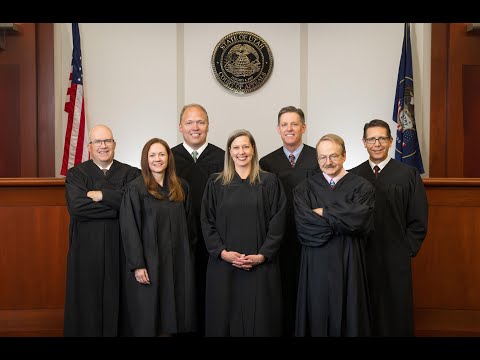
The Utah Court of Appeals heard argument in RP over whether a juvenile-court order that adjudicated a man as a child's biological father is a final, appealable ruling and which limitations period applies to related paternity petitions.
"This is a statute of limitations case," Emily Adams, counsel for the appellant mother, told the panel. Adams said the record raises two questions: whether the mother's appeal was timely and which statute of limitations applies to a biological father's paternity petition. She argued the January 2023 order that adjudicated the father and allowed intervention was part of the juvenile adjudication process and not a standalone final order that should trigger an immediate appeal in most cases.
Panel members probed practical consequences on juvenile-docket timing and permanency for children. One justice observed that declaring a man a child's father "fundamentally changed the landscape of the entire case," a point the Guardian ad Litem's counsel, Keith Hackett, emphasized: once parentage is adjudicated, the person has rights and duties in the juvenile proceeding, and the child’s interests may be altered.
The state, represented by John Peterson, urged restraint: allowing appeals from every intermediate paternity determination could multiply final orders and slow child-welfare timelines that favor prompt permanency. Counsel discussed the interplay of statutory enumerations and catchall provisions and whether discovery or tolling doctrines address the state's concerns about fairness to late‑filing biological parents.
Counsel and the court also debated the application of so-called "plain error" or "plain‑air" review (the court questioned whether a waivable affirmative defense such as a statute of limitations should be treated as non‑waivable in some juvenile contexts). Adams emphasized that the trial court in the record resolved standing and did not reach statutes of limitation on the merits.
After argument and rebuttal, the panel said it would take the matter under advisement and issue an opinion in due course.
What happens next: The Court of Appeals will decide whether the January adjudication of parentage is an immediately appealable order and which statute of limitations framework controls. The ruling could affect the timing of appeals in juvenile paternity disputes and how courts balance child‑welfare speed with parental‑rights claims.
Notes on names and record: Counsel and the bench used terms including "declared father," "biological father," and "adjudicated father" rather than a single proper name in argument. The transcript includes references indicating the declared father is deceased; counsel discussed the child's relationship to the deceased man's family during argument.