Get Full Government Meeting Transcripts, Videos, & Alerts Forever!
Get email alerts on the Civil Procedure topic
No spam. Unsubscribe anytime.
Court of Appeals hears challenge to default judgment over missing Rule 8 warning
Summary
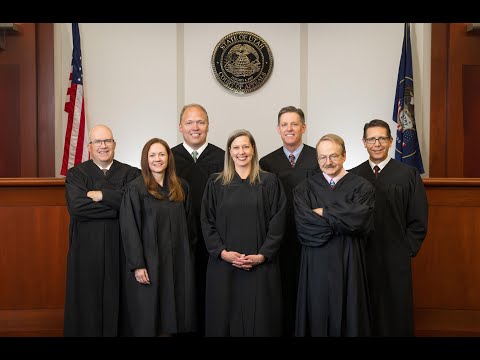
The Utah Court of Appeals heard arguments in Checker Prop Utah v. Butcher over whether the district court abused its discretion by refusing to vacate a default judgment after required Rule 8 warning language was omitted and related service issues. The panel took the matter under advisement.
May it please the court. The Utah Court of Appeals heard oral argument in Checker Prop Utah v. Butcher on a question the appellant characterized as driven by recent rule changes: whether the omission of mandatory Rule 8 warning language in pleadings opens the door to Rule 60(b) relief from a default judgment.
Steven Bergman, counsel for appellants Kristen Butcher and Heather Goodson, told the court the amendments to Rules 7, 8 and 36 (effective 05/01/2021) were intended to add a mandatory caution and to place the omission within the range of grounds that may support a Rule 60(b) motion. "If the warning is not included on the complaint or dispositive motion...that would be grounds for a motion to vacate a judgment pursuant to Rule 60," Bergman said, arguing the district court erred by excusing the omission because it relied on similar language in a separate summons.
Bergman also raised fact-specific objections to the district court's handling of notice and service. He told the panel that one defendant received a default-motion mailing at a restaurant or an alternate address rather than at the lease address listed in court filings and that opposing counsel never filed an appearance despite correspondence suggesting an attorney was involved. Bergman said the combination of a missing Rule 8 warning, defective summons or mailing, and the lack of an attorney appearance supports finding excusable neglect and surprise that would justify setting aside the default.
Christian Hansen, counsel for Checker Prop, disputed the characterization that appellants were misled. "There is exactly 0 evidence in the record that the appellants were lied to or misled about the lawful use of the property," Hansen told the court, pointing to a lease provision that assigns to the tenant the duty to verify lawful uses. Hansen further argued that many of the facts now pressed on appeal (the content of the summons, the bilingual notice, and the location of the default notice) were not preserved for appellate review, and that the only properly preserved question is whether the Rule 8 omission, standing alone, warrants reversal under the abuse-of-discretion standard.
The panel probed both camps on the proper standard of review and on whether the district court reasonably found that the summons and other pre-litigation communications provided adequate notice. Justices pressed appellant counsel about what additional facts would show true "abuse of discretion," and they pressed respondent counsel on why the trial court's findings were not undermined by the additional factual assertions in the appellate record.
After rebuttal, the court took the matter under advisement and said it would issue an opinion in due course. The court recessed until 10:15 a.m.
What happens next: The Court of Appeals will issue a written opinion resolving whether the district court abused its discretion in declining to set aside the default judgment. If the panel finds abuse of discretion, the case will be remanded for further proceedings at the trial level; if not, the default judgment remains in place.
Notes on parties and record: Appellant counsel Steven Bergman identified the appellants as Kristen Butcher and Heather Goodson in argument. The respondent is styled in the record as Checker Prop Utah. The transcript includes repeated references to "Heather Gibson" in service discussions; the record therefore contains inconsistent references to an individual with the given name Heather (Goodson/Gibson). The article does not resolve that inconsistency and reports the two nominal forms exactly as they appeared in argument.