Get Full Government Meeting Transcripts, Videos, & Alerts Forever!
Get email alerts on the Standing And Annexation topic
No spam. Unsubscribe anytime.
Utah Court of Appeals hears challenge to Grantsville annexation, dispute over standing and attorney fees
Summary
At oral argument the court focused on whether sponsors of an incorporation initiative have statutory or traditional constitutional standing to challenge a Grantsville annexation and whether a district court's Rule 65(a) award of attorney fees to Skywalk Development was supported by findings. The panel took the case under advisement.
SALT LAKE CITY
The Utah Court of Appeals heard arguments on a dispute over whether sponsors of a proposed municipal incorporation have the legal standing to challenge Grantsville City's acceptance of an annexation petition and whether an award of attorney fees under Rule 65(a) was supported by the record.
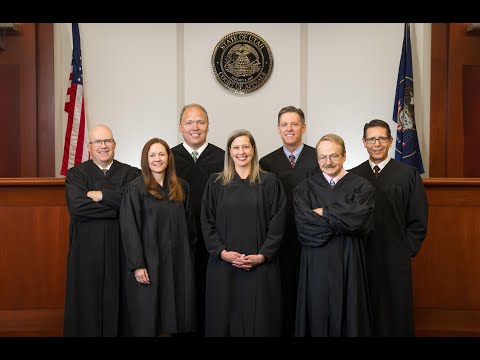
At the start of the argument, the panel, led by Judge Harris and sitting with Judges Mortensen and Luthy, announced the case: ERDC Community Association v. Skywalk Development. Janet Conway, counsel for the sponsors, told the court she would address two main issues: standing and the propriety of an award of Rule 65(a) attorney fees to Skywalk Development. "There are two issues I would like the opportunity to address today," Conway said.
Why it matters: The appeal asks whether the sponsors of an incorporation initiative—who say the initiative fixed municipal boundaries—may bring suit to block an annexation that they contend altered those boundaries, and whether a lower court properly calculated fees awarded to a developer identified as Skywalk Development.
Conway's argument centered on three bases for standing: (1) a pre-existing constitutional right tied to the initiative process, (2) public-interest/open-courts standing under state law, and (3) common-law authority to challenge unlawful governmental action. She told the court that sponsors were deprived of a legally protected interest when Grantsville proceeded with an annexation without the mandated map and certification; she also argued that portions of the annexation code as amended in mid-2020 (which she identified in argument as affecting §10-2-403.5 and related provisions) are unconstitutional as applied.
A majority of the panel pressed Conway on whether those claims were statutory in substance rather than constitutional, and how recent Utah precedents limiting standing (cited by the bench collectively during questioning) bear on her position. A panel member asked whether the Declaratory Judgment Act "by itself" confers standing; Conway replied that the DJA provides a remedy but that a separate, legally protected interest must exist to bring the action.
Taylor Fox, counsel for Skywalk Development, told the court the appeal should be resolved on three dispositive grounds: "First, sponsors lack standing on all of their claims. Second, sponsors failed to exhaust their administrative remedies. And third, sponsors have no state constitutional claims." Fox argued the petition's causes of action and the remedies sought are statutory in nature (to have the annexation denied) and therefore subject to the statute's standing restrictions. He urged the panel to affirm the district court's ruling on that basis.
A recurring line of questioning concerned the district-court preliminary injunction and the Rule 65(a) fee award to Skywalk. The bench asked how the injunction's wording, which used the defined term "respondents," could be read to enjoin Skywalk if Skywalk was not the party the sponsors specifically sought to enjoin. Conway contended the injunction in practice restrained Grantsville's ability to proceed and that Skywalk had no independent act left it could take that the order actually prohibited—undercutting the claim that Skywalk was a wrongfully enjoined party entitled to the fee award. Conway also argued the lower court's fee order lacked the specific factual findings required to sustain the dollar amount.
Nate Mitchell, appearing for Grantsville City, framed the case as one presenting overlapping statutory and constitutional questions but emphasized the legislature's authority to define standing in statutory schemes governing annexation. Mitchell told the court that the Utah Constitution does not create a free-standing right to fixed boundaries and that the annexation code expressly contemplates annexations while incorporation initiatives may be pending. He urged the panel to defer to the statutory framework and rejected what he described as speculative evidence of concrete harms to individual sponsors.
Throughout the argument the panel tested the boundary between "statutory" standing (where a statute identifies who may challenge a decision) and traditional constitutional standing (which requires a distinct, particularized injury). Counsel and the bench debated whether McKittrick and more recent Utah cases require that plaintiffs asserting statutory claims show statutory standing before the court considers any separate constitutional theory.
Direct quotations during argument included Conway's framing of the appeal: "Appellants as the sponsors of the incorporation initiative measure have standing to challenge a municipality's actions that alter and diminish the fixed boundaries contained in the sponsors' incorporation initiative measure." Fox summarized his position: "Sponsors lack standing on all of their claims."
The court took the case under advisement and said it would issue a decision as soon as reasonably possible. No formal vote or decision was announced at the hearing.
What to watch next: The appeals court's written decision will be the next authoritative step; it may address whether sponsors may litigate under statutory or constitutional theories, whether the injunction and fee award were legally proper, and whether any portion of the annexation code at issue must be construed or struck down as applied.