Get Full Government Meeting Transcripts, Videos, & Alerts Forever!
Get email alerts on the Property Dispute topic
No spam. Unsubscribe anytime.
Court of Appeals hears dispute over 2017 quitclaim deed in Pioneer Homeowners Association case
Summary
At oral argument, Pioneer HOA's counsel argued factual disputes preclude summary judgment on whether a corporate president had actual or apparent authority to execute a 2017 quitclaim deed; TaxHawk urged affirmance, saying the record lacks affirmative board authorization for the conveyance.
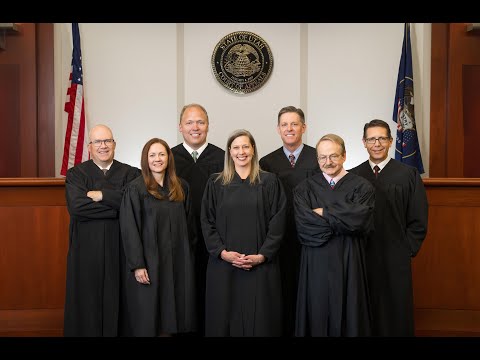
The Utah Court of Appeals heard oral argument in Pioneer Homeowners Association v. TaxHawk over a 2017 quitclaim deed that transferred a narrow strip of land. Appellant counsel Doug Farr told the panel the district court erred in granting summary judgment for TaxHawk because the record contains disputed issues of material fact about whether the HOA president, Steven Cox, had actual written or oral authority or, alternatively, apparent authority to convey the strip.
"The district court's decision and grant of summary judgment is is was improper for 3 reasons," Farr said, identifying (1) disputed written authority, (2) disputed oral authority and (3) disputed apparent authority and Pioneer HOA's reasonable reliance.
Farr pointed to long‑standing use of the strip, business notes and a journal kept by Steven Cox to show he and his family believed the disputed parcel was part of land conveyed in February 2001. He argued those facts, together with testimony that Cox was given broad managerial authority over the family drive‑in holding company, raise genuine factual disputes that should defeat summary judgment under the statute of frauds framework described in Posner and related cases.
TaxHawk's counsel countered that the appellate record lacks evidence of an affirmative act of authorization by the corporate principal — the HOA board — and relied on the court's decisions in Mathis and related precedent. TaxHawk emphasized undisputed testimony from multiple former board members that they did not approve the 2017 quitclaim deed and that they did not believe the HOA owned the strip. "You can't draw an inference from facts that are flatly contradictory of the inference that you wanna draw," the respondent argued, pressing that the party asserting an oral‑authorization exception must point to board manifestations of approval, not merely a manager's unilateral belief.
The panel pressed both sides about the degree of specificity required for oral authorization (whether a broad grant to "run the company" suffices, or whether the board must have authorized the particular conveyance). One judge summarized the procedural tension: "So it sounds to me like there could be factual disputes here," noting factual‑finding may turn on the credibility of board testimony and documents.
Counsel for both sides agreed the appeal turns on legal principles applied to a record of depositions, declarations and business records; the court heard extended questioning about what in the record constitutes affirmative board authorization, the effect of prior boundary agreements and whether the 2017 transaction was a discrete conveyance or merely a completion of an earlier transfer. The panel concluded oral argument by taking the matter under advisement and promising a written decision.
No formal action was taken at argument; the court will issue a written opinion resolving whether the district court's grant of summary judgment should be affirmed or reversed.