Get Full Government Meeting Transcripts, Videos, & Alerts Forever!
Get email alerts on the Water Rights Survivability topic
No spam. Unsubscribe anytime.
Court of Appeals weighs whether unapproved water-right applications survive an applicant’s death
Summary
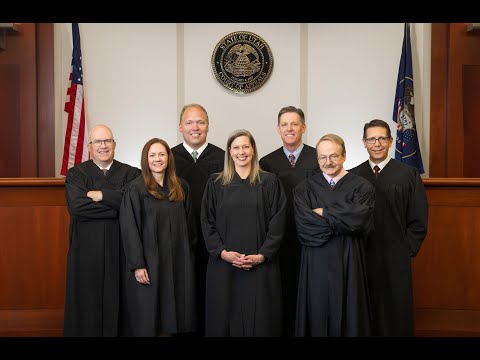
The Utah Court of Appeals heard oral arguments in Marriott v. Wilhelmsen over whether an unapproved water-right application is an inchoate property interest that survives an applicant’s death or a personal claim that extinguishes at death; the panel pressed both sides on the limits of common-law survivability and statutory text.
The Utah Court of Appeals heard argument on whether claims arising from an unapproved application to appropriate water survive the applicant’s death, in Marriott v. Wilhelmsen. Appellant counsel Robert Mansfield urged reversal of a district judge’s order that denied substitution of the decedent’s personal representative and held the claims extinguished.
Mansfield framed the dispute as a legal question: “The fundamental issue here before the court is whether these claims asserted by mister Marriott did or did not survive his death,” he told the panel, arguing the application is an inchoate property right that confers priority and can be assigned rather than a purely personal license. He cited McGarry and other decisions to contend the application has tangible value and affects specific real property identified in the filing.
The state, through Andrew Dimock for the state engineer, urged affirmance. Dimock said the property interest only arises after completion of the final steps — diversion, proof of beneficial use and issuance of a certificate of appropriation — and that an unapproved application is not a vested water right. “The statute here does not provide for survivability,” he told the court, referencing factors under Title 73 that permit the state engineer to examine the applicant’s trustworthiness and financial ability at the application stage.
Melissa Reynolds, arguing for Weber Basin Water Conservancy District, emphasized the common-law survivability test as articulated in Gressman: survivable claims typically involve injury to tangible property. She told the panel that denial of the unapproved application did not injure any vested water right or property interest at the time the state engineer acted.
Judges pressed both sides on several hypotheticals: whether approval plus substantial infrastructure investment and diversion (but before a certificate issued) would produce a survivable claim; whether statutory indicia such as the ability to record assignments and priority rules weigh the matter toward property characterization; and how to read Gressman and subsequent authority outside the tort context. Questions focused on where a legal line should be drawn between personal characteristics that matter at the application stage and the in rem aspects of water rights that attach to property once perfected.
No opinion was announced from the bench. The panel thanked counsel for “very helpful” briefing and arguments and said it would issue an opinion as soon as practicable.
The court recessed briefly before calling the next case.