Get Full Government Meeting Transcripts, Videos, & Alerts Forever!
Get email alerts on the Criminal Justice topic
No spam. Unsubscribe anytime.
Utah Court of Appeals hears arguments in State v. Moore over counsel’s handling of prior‑acts and hearsay evidence
Summary
At oral argument in State v. Moore, defense counsel urged reversal, arguing trial counsel’s allowance of repeated prior‑acts and hearsay testimony (including statements about a victim’s biological mother) was objectively unreasonable and prejudicial; the state countered counsel faced a split‑second choice and reasonably allowed evidence so the source could minimize prejudice. The court took the case under advisement.
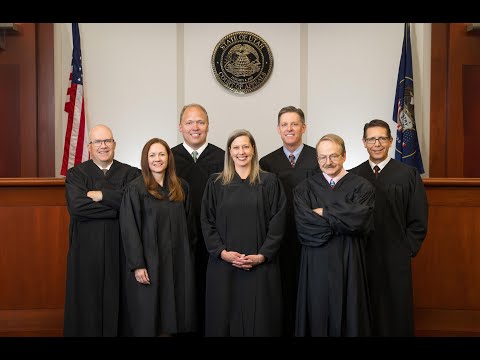
The Utah Court of Appeals on oral argument considered whether trial counsel’s decision to allow testimony about a victim’s biological mother and related prior‑acts evidence amounted to ineffective assistance in State v. Moore. Defense counsel Charice Bukalski told the three‑judge panel that Mr. Moore was convicted of multiple child‑abuse and child‑endangerment charges and that the jury repeatedly heard an account implicating the biological mother, which defense counsel says was highly prejudicial and should have been excluded under Rule 404(b).
Bukalski framed the appeal around two questions: “can the strategic admission of prior acts evidence ever be ineffective under Strickland?” and whether, without the contested evidence, the jury could have harbored reasonable doubt. She argued the record showed the timing of disclosures undercut the defense’s motive theory and that, once it became clear the biological mother did not know about the allegations before the victim’s disclosure, trial counsel should have objected and sought a bench ruling to limit hearsay: "As soon as he knew that she didn't know about it before she disclosed... counsel should have known that's out the window," Bukalski said.
A panelist pressed Bukalski on whether defense counsel had ‘opened the door’ in opening statements by describing the biological mother’s alleged assault; Bukalski replied counsel had anticipated the state’s proof but abandoned the strategy at trial when the timing did not support that motive. She emphasized the cumulative effect of multiple narrations—including adoptive‑mother testimony, a Children’s Justice Center (CJC) assessment form, and trial testimony—created a single, persuasive narrative the jury could rely on, and that no 404(b) notice was given.
State counsel (identified in the record during argument as Karen Klusnick) urged the court to affirm. The state argued that once the jury became aware of the biological‑mother account, counsel faced two poor options: object and risk prompting juror speculation about why defense counsel sought exclusion, or allow the testimony so the biological mother could appear and minimize prejudice by testifying she “could have been consensual.” The state told the panel, “the jury already knows about it and we cannot undo that,” and maintained that trial counsel’s choice to let the testimony play out in the moment was a reasonable tactical decision supported by case law cited at argument (Wyatt, Green) and by evidence‑rule principles allowing certain medical diagnostic reports under Rule 803.
Arguing the other contested evidence, the state also told the court that the nurse’s forensic reports and the CJC interviews were properly before the jury and that the allegations were presented multiple times in different forms, reducing the chance that the late testimony materially changed the jury’s view. Bukalski responded in rebuttal that counsel could have sought an in‑camera bench ruling to limit hearsay and preserve the opening statement’s permissible elements while preventing cumulative hearsay from being introduced through other witnesses.
No decision was announced at the hearing. Chair Judge Oliver told counsel the court would take the matter under advisement and issue an opinion as soon as possible.