Get Full Government Meeting Transcripts, Videos, & Alerts Forever!
Get email alerts on the Evidence Rule 408 topic
No spam. Unsubscribe anytime.
Utah appeals court considers whether Rule 408 can bar proof of alleged oral settlement
Summary
At oral argument in Small v. Small the Utah Court of Appeals probed whether Rule 408 (settlement communications) prevents a party from proving—or using recordings to impeach denials of—the existence of an alleged oral settlement in a divorce case, with counsel disagreeing sharply on exceptions and partial‑performance evidence.
In oral arguments before a three‑judge panel of the Utah Court of Appeals, appellant counsel Jeremy Jones asked the court to clarify whether evidence from settlement discussions may be used to prove or to impeach the denial of an alleged oral settlement in a divorce matter.
"We are asking the panel to consider giving guidance to commissioners on how they might handle, evidentiary objections or other objections generally in the proceedings below," Jones told the panel. He said the district court had excluded his client's testimony and an audio recording under Rule 408 and that independently discoverable material—such as notes taken by a third party, Devin—should be accessible to impeach a denial of an agreement.
Defense counsel Michael Christiansen framed the central question differently: "The central issue on the interlocutory appeal is the application of Rule 408 and whether or not the commissioner in the trial court correctly applied it and whether or not the impeachment purposes that are being sought have an appropriate limit that's being articulated here." Christiansen argued Rule 408 creates a protected "safe space" for compromise negotiations and that admitting settlement statements or recordings to prove liability or amounts would undermine that policy.
Judges pressed both sides on several doctrinal points. The panel noted precedent, including Day v. Barnes and the text of Rule 408, and repeatedly asked whether Rule 408 operates as a kind of privilege or whether exceptions—such as impeachment, subsequent writings, partial performance or independently discoverable evidence—permit limited use of settlement communications. "If you've got a third party who's not a participant to the settlement discussions present, particularly when that person takes notes, that is independently discoverable material," Jones argued. Christiansen responded that notes that memorialize the substance of negotiations are themselves tied to the settlement and therefore typically fall within the rule’s protection.
The judges also asked whether proof only that the parties reached "an agreement" (without disclosing terms) would be treated differently from evidence that reveals the substance of negotiations, and whether some facts (for example, partial performance such as procuring an appraisal) could be used to establish an oral agreement without running afoul of Rule 408. Jones pointed to partial performance and collateral admissions as routes to prove existence, while the bench repeatedly noted a substantial body of law favoring a broad application of Rule 408 where settlement negotiations are at issue.
Counsel described trial strategy that would follow either ruling: Jones said he planned to present his client's declaration and, if the opposing party denied the proffered terms, use the recording for impeachment. As one judge phrased the hypothetical, "If she said no, you would then play the recording." Christiansen emphasized that approach would largely eliminate the protection Rule 408 affords.
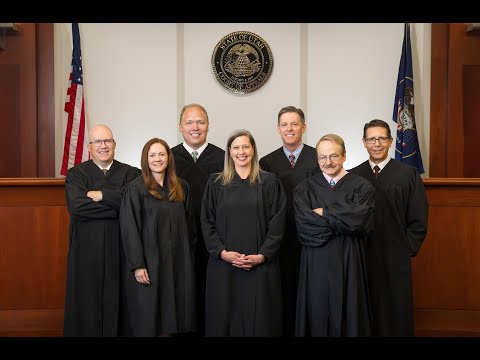
The panel did not announce a ruling. "We appreciate your briefs in this matter and argument today. I think it's helped us understand your positions better, and we will issue a decision in due course," the court said at adjournment. The court asked for any record clarifications by letter, and the argument concluded.
The outcome will affect how trial courts treat recordings, third‑party notes and testimony about alleged oral settlements—particularly in family‑law contexts where parties sometimes rely on partial performance or subsequent writings to prove an alleged oral deal. The court’s forthcoming opinion will clarify the interplay among Rule 408, the statute of frauds, and recognized exceptions such as impeachment or independently discoverable evidence.