Get Full Government Meeting Transcripts, Videos, & Alerts Forever!
Get email alerts on the State V Wardle topic
No spam. Unsubscribe anytime.
Appeals court weighs whether in‑camera review of medical records is warranted in State v. Wardle
Summary
In State v. Wardle (No. 20230761) the Court of Appeals considered whether defense counsel met the three‑part Rule 506 test to overcome the medical/therapy privilege — alleging a recovered/repressed memory and arguing medical or therapy records are reasonably certain to contain evidence that could undermine the complainant's reliability.
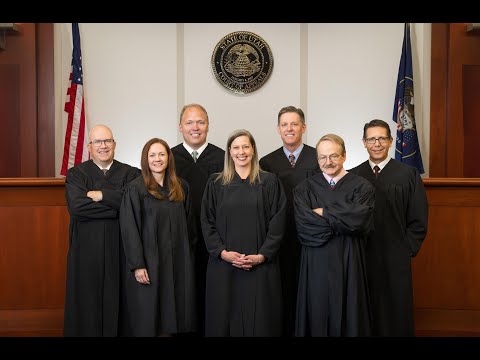
The Utah Court of Appeals heard argument in State v. Wardle (No. 20230761) on an interlocutory issue: whether trial counsel established the threshold showing required by Rule 506 (medical/therapy privilege) to obtain an in‑camera review of the complainant’s medical and therapy records.
Sarah Carlquist, representing Mr. Wardle, asked the panel to remand for in‑camera review, saying the complainant’s police disclosures — including that she "blocked this incident out of my mind and recently remembered it after having experienced medical issues" — were sufficient to infer a condition that goes to the reliability element of Wardle’s defense. Carlquist said the records were "reasonably certain" to contain information that could create reasonable doubt and that expert review could show whether the recovered memory process affected testimonial reliability.
Jonathan Bauer, for the state, argued the defense had not met the strict reasonable‑certainty standard. He characterized the record on appeal as limited to two hearsay police statements and contended that the motion below amounted to a fishing expedition without sufficient evidence to justify the intrusion on the complainant’s privacy. Bauer argued trial remedies and discovery remained available and that trial‑level factfinding was the appropriate forum for further factual development.
Judges on the panel pressed both sides on distinctions between the two requests the defense made — (a) medical records contemporaneous with an April 2020 disclosure (which may not exist), and (b) therapy records from 2021 that are more likely to exist — and whether the requests should rise or fall together. The court discussed precedent including Worthen and Franklin v. Stevenson in weighing whether the factual record supplied the predicate for in‑camera review.
The court took the matter under advisement. No final ruling was announced at the hearing; the panel discussed that remand could permit a narrowed or renewed request under amended evidentiary rules.