Get Full Government Meeting Transcripts, Videos, & Alerts Forever!
Get email alerts on the Criminal Justice Speedy Trial topic
No spam. Unsubscribe anytime.
Court Hears Arguments in State v. Puente Over Nearly Three-Year Delay, Defense Says Speedy‑trial Violation
Summary
At oral argument, appellant Hannah Levitt Howell told the Utah Court of Appeals that nearly 35 months of delay—much of it pandemic‑era—violated Mr. Puente’s speedy‑trial rights and that trial counsel was ineffective for not objecting to prosecutorial remarks about motive. The state countered that most delay was attributable to the defendant and that prejudice to defense was not shown.
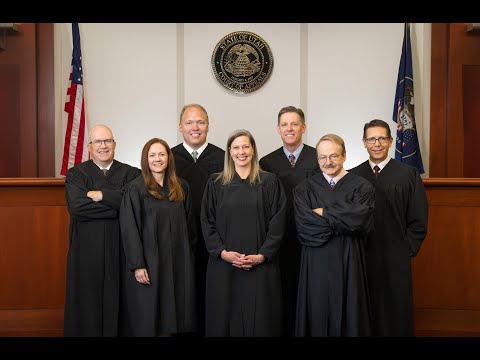
Hannah Levitt Howell, counsel for appellant Jose Puente, told the Utah Court of Appeals on the first morning of oral arguments that Mr. Puente’s trial was delayed nearly three years and that the trial court erred by denying his motion to dismiss on speedy‑trial grounds. "Mister Puente raises 2 issues," Howell said, identifying both the speedy‑trial claim and a separate ineffective‑assistance claim tied to closing‑argument remarks.
Howell said the Barker factors favor reversal: the delay was almost 35 months; she attributed roughly 207 days of delay to defense actions and about 121 days to the State; she also argued Puente consistently asserted his right to a speedy trial and suffered prejudice in the form of anxiety and danger while incarcerated during the COVID pandemic.
Judges pressed counsel on whether the court should consider delay that occurred after the motion was filed or only the interval through the ruling, and whether continuances recorded as the defendant "refused to be transported" could be credited to the defense. Howell urged the court to scrutinize the record and treat some continuances (for example, a scheduling conflict at the jail involving a shower) as not attributable to the defendant.
The panel also asked Howell to distinguish this case from a pandemic‑era precedent the court repeatedly referenced (referred to in argument as Tymon or Timon). Howell said that while pandemic delays may be neutral under that precedent, the total length here and the specific prejudice of prolonged pretrial incarceration make this case different: "I think the anxiety, which the trial court recognized in some part, acknowledged that there was some prejudice in this case." A judge replied that the panel remembered the prior case and noted it involved similar pandemic circumstances.
On the second claim, Howell argued trial counsel was deficient for not objecting to the prosecutor’s closing‑argument remarks that relied on the prosecutor’s experience with "75 different homicides" and speculative lists of motives. Howell said the remarks invited the jury to speculate about motives not in evidence and to view the defendant as an "other" about whom jurors need not understand motive to conclude guilt.
The State, represented at argument by Wasang Dusepp, countered that the Barker factors do not weigh in the defendant’s favor. The State argued that much of the delay was caused by the defendant—through waivers, stipulations to continuances and refusals to appear—and that pandemic delays should be weighed neutrally. On the ineffective‑assistance claim, the State argued counsel reasonably used the prosecutor’s equivocal comments about motive to the defendant’s advantage and highlighted circumstantial evidence tying the defendant to the offense.
After extended questioning about attribution of delay, the effect of pandemic‑era scheduling, and the appropriate assessment of prejudice, the court took the matter under advisement and recessed until the court’s stated time. The Court said it would "issue a decision in due course."