Get Full Government Meeting Transcripts, Videos, & Alerts Forever!
Get email alerts on the Criminal Justice Speedy Trial topic
No spam. Unsubscribe anytime.
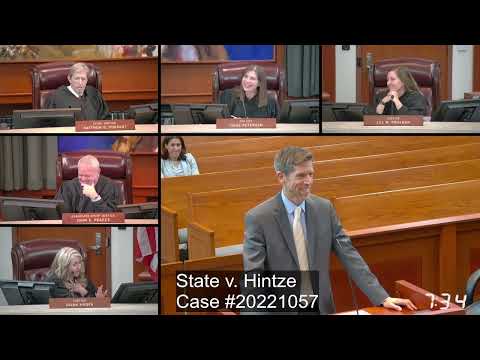
Utah Supreme Court weighs whether state's two-year failure to notify defendant warrants dismissal for speedy-trial violation
Summary
At oral argument the justices probed whether a roughly two-year period when a defendant was unaware of charges and the State's admitted negligence create "presumptive prejudice," or whether the defendant must show non-speculative harm tied to a delayed parole hearing or other effects.
Utah Supreme Court justices heard competing arguments over whether a two-year period in which state prosecutors failed to notify a defendant of criminal charges amounts to a violation of the Sixth Amendment right to a speedy trial.
"May it please the Court, subject to this Court's questions, of course, I plan on focusing the balance of my argument mostly on the standards applicable to the 2 disputed factors here, which is the assertion of the right and the prejudice," state counsel John Nelson told the justices, arguing that a defendant must assert both a desire for "speed" and for a "trial" for the assertion factor to weigh in his favor. Nelson urged the Court to require specificity and to exclude speculative prejudice from weighing in the defendant's favor.
Responding for the respondent, David Ferguson urged the Court to view the case in light of Doggett v. United States and similar precedent, arguing that the length and negligence of the delay here'roughly two years before the defendant became aware of the charges'support dismissal. "The state filed charges against Mr. Hintze and then forgot that they were prosecuting him," Ferguson told the justices, saying that the combination of delay and the State's negligence can give rise to presumptive prejudice.
Much of the argument turned on prejudice: whether the defendant must show concrete, non-speculative harm (for example, a demonstrable, adverse effect on parole prospects), or whether prolonged, negligent delay can by itself tip the Barker balancing test toward dismissal. Nelson maintained that "speculative prejudice is not prejudice" and urged a threshold that excludes purely speculative harms. Ferguson countered that the record contains "breadcrumbs" suggesting the pending charge affected a parole eligibility process and that the Court of Appeals was justified in treating the delay and negligence as highly significant.
Several justices pressed both sides on the record evidence. The bench questioned whether the district court had credited testimony that a parole hearing was postponed or whether the record contains corroboration beyond the defendant's statement. Defense counsel pointed to an administrative rule permitting the Board of Pardons and Parole to delay hearings, a parole eligibility sheet in the record and the defendant's testimony; the state stressed that the district court had little concrete evidence showing the parole hearing was canceled because of the unresolved charge.
Both sides acknowledged that remedy and context matter: the only remedy for a proven speedy-trial violation is dismissal, which the state argued counsels caution and careful proof of prejudice. Defense counsel replied that where negligence causes a defendant to remain unaware of charges for an extended period, dismissal is sometimes the appropriate check on prosecutorial and administrative failures.
The argument concluded without the Court announcing a decision; the justices repeatedly probed the scope of the assertion factor, the appropriate standard for prejudice under Barker, and whether the facts here are close enough to Doggett to justify treating the delay as presumptively prejudicial. The Court took the matter under advisement.