Get Full Government Meeting Transcripts, Videos, & Alerts Forever!
Get email alerts on the Human Trafficking Sufficiency topic
No spam. Unsubscribe anytime.
Court also addresses sufficiency of evidence in human-trafficking and related counts
Summary
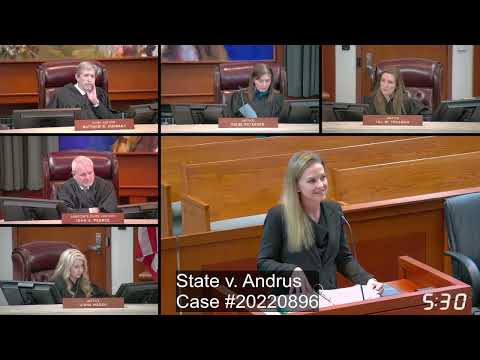
During argument in State v. Andress the State urged the Court to affirm convictions for human trafficking, marijuana distribution and image-production offenses, arguing texts and witness testimony provided sufficient evidence; defense contested the statutory reach of the trafficking charge and whether photos versus livestream video could have been the jury's ground for conviction.
The Utah Supreme Court also heard lengthy argument about whether the evidence was sufficient to support convictions for human trafficking of a child, marijuana distribution and related image-production offenses.
State counsel Jonathan Bauer summarized the prosecution's account: the defendant, identified in briefs as Dustin Andress, used internet apps to meet and solicit a 16-year-old (referred to in filings as "Laura"), exchanged offers including marijuana and asked for sexually explicit photos and videos over months, and some physical acts occurred in Summit County. Bauer told the Court that jury instructions covered images and video, that some messages and exhibits corroborated the victim's testimony, and that the sufficiency standard allows the appellate court to consider whether any evidence could support the jury's verdict.
Defense counsel pressed two related points. First, counsel argued that the trafficking statute includes a distinct solicitation/prong and that an "offer" of marijuana or other items does not necessarily equate to the commercial exchange the prostitution/solicitation statutes contemplate; if the element of exchange of value were lacking, the trafficking charge could fall short. Second, defense counsel argued the prosecutor had elected to rely primarily on still photographs at trial and that video or live-streamed material may not be encompassed by the jury's election; defense cited out-of-jurisdiction authority distinguishing "images" from video. The State responded that video can be considered a series of still images and that jury instructions and the record included evidence sufficient to sustain the convictions.
Justices questioned the parties about whether the jury's reliance on photos rather than video affects appellate review, about whether the trafficking statute's structure meant it was intended to capture a broader supply chain of actors or required an actual exchange for value, and about whether repeated solicitations and offers over time supported the trafficking finding. The parties also debated whether a conviction could be upheld under a lesser included solicitation offense if trafficking could not be sustained.
The Court took the sufficiency and statutory questions under advisement along with the Data Privacy Act issues.