Get Full Government Meeting Transcripts, Videos, & Alerts Forever!
Get email alerts on the Termination Statute Interpretation topic
No spam. Unsubscribe anytime.
Utah Supreme Court weighs whether appeals court misapplied best‑interest framework in termination case
Summary
At oral argument the justices pressed counsel over whether the Court of Appeals improperly reweighed evidence and whether statutory best‑interest provisions (including §80‑4‑104 and related sections) apply after adjudication; the court took the case under advisement.
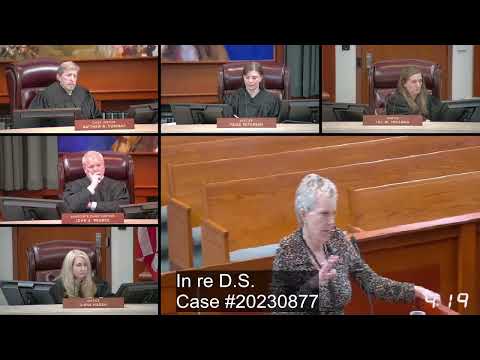
The Utah Supreme Court heard argument over whether the Court of Appeals misapplied the statutory best‑interest framework in a parental‑termination appeal, focusing on how and when provisions of the termination statute should guide the 'strictly necessary' analysis. Counsel for the children's guardian ad litem argued the Court of Appeals erred by tying 'best interest' to provisions of §80‑4‑104 without properly anchoring the inquiry to the mandatory factors in §§83‑303 and 83‑304. Counsel for the State urged deference to the juvenile court's credibility findings and the juvenile court's conclusion that termination was strictly necessary to protect the children.
The argument turned largely on statutory text and timing: whether subsections of §80‑4‑104 are limited to circumstances involving a presumptively fit parent or whether the statute's child‑focused policies remain relevant after an adjudication that rebuts parental fitness. Martha Pierce, the children's guardian ad litem, told the Court, "The Court of Appeals erred by tying best interest to eighty‑four‑one hundred and 4," and urged the justices to read limiting language in the statute and to tie best‑interest review to the mandatory factors in §§83‑303 and 83‑304. John Peterson, representing the State, said the juvenile court set out reasons why termination was strictly necessary and cautioned that an appellate court should not substitute its own weighing of credibility for findings made below.
Justices probed recurring factual and legal themes: when reunification services and permanency hearings resolve questions about return to a parent, how much weight a juvenile court may give to children's expressed wishes and whether a court must make an explicit capacity finding before relying on those wishes, and how to treat evidence that weekly jail visits were 'tedious' across several years but not proven harmful. Counsel for the father, Shelly Harding, emphasized the narrowness of the record and argued that the appellate court was correct to reverse termination where there was a relative (grandmother) willing to provide a permanent placement and the record did not show visits were harmful: "Dad loves his kids, kids love him," she said, describing the factual setting that led the Court of Appeals to conclude termination was not strictly necessary.
Counsel and the justices also discussed a recent statutory amendment. Pierce noted a legislative change she said became effective in March or April of the year (cited during argument as §84‑301 sub 2) that adopts a 'child's point of view' test for assessing whether termination is strictly necessary and expressly incorporates consideration of the factors in §§83‑303 and 83‑304 and whether feasible alternatives exist. That amendment was framed by counsel as aligning statutory text with the approach she urged the Court to adopt.
Several justices asked detailed procedural questions—distinguishing shelter hearings, adjudication, dispositional and permanency hearings—and pressed whether some language in §80‑4‑104 applies only pre‑adjudication or whether it continues to inform best‑interest analysis after grounds for termination are found. Counsel pointed to case law origins for some statutory language and to the record below—factual findings about the grandmother's role, the children's expressed familial identity (including a child's drawing), and the father's history and incarceration—as the basis for opposing positions.
The bench also spent time on standards of review, asking whether the Court of Appeals had impermissibly reweighed evidence rather than deferring to the juvenile court's credibility determinations. Peterson argued appellate deference is appropriate when the juvenile court had the opportunity to observe witness demeanor, while Harding and the Court of Appeals' defenders emphasized the appellate court's role in determining whether the evidence sufficed to justify termination.
The Supreme Court concluded argument by thanking counsel and taking the case under advisement. No decision was announced from the bench.