Get Full Government Meeting Transcripts, Videos, & Alerts Forever!
Utah Supreme Court weighs challenge to spouse-based domicile rule in tax statute
Summary
In oral argument, attorneys debated whether Utah Code 59-10-136 unconstitutionally treats a nonresident as domiciled in Utah solely because their spouse has Utah ties; appellant—s counsel said the irrebuttable presumption ignores the taxpayer—s own contacts, while the Tax Commission urged consideration of joint filing and other contacts and said the statute is constitutional.
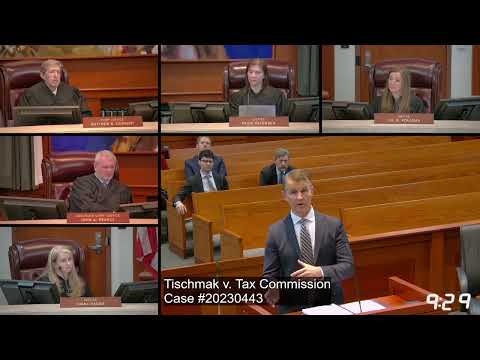
SALT LAKE CITY — The Utah Supreme Court heard arguments challenging a provision of the state—s domicile statute that, the petitioner says, automatically deems a nonresident to be domiciled in Utah if their spouse has established ties to the state.
"The statute that we are here reviewing, which is Utah code 59, 10, 136, is very straightforward in its effect and its impact," said Mike Black, attorney for appellant Terry Tishmack. He told the court the provision creates an "immediately and irrebuttably presumed" domicile for a nonresident whose spouse attends school in Utah, has a permanent home, or otherwise established domicile in the state.
Black argued that the presumption removes the individualized inquiry courts normally use to determine domicile and therefore "ignores your choice" to live in another state. He told the justices the law asks only whether a spouse meets those conditions and then treats the taxpayer as a Utah resident regardless of the taxpayer—s own contacts. "It immediately takes away from them all of their right to choose where they…
Already have an account? Log in
Subscribe to keep reading
Unlock the rest of this article — and every article on Citizen Portal.
- Unlimited articles
- AI-powered breakdowns of topics, speakers, decisions, and budgets
- Instant alerts when your location has a new meeting
- Follow topics and more locations
- 1,000 AI Insights / month, plus AI Chat