Get Full Government Meeting Transcripts, Videos, & Alerts Forever!
Get email alerts on the Construction Liens topic
No spam. Unsubscribe anytime.
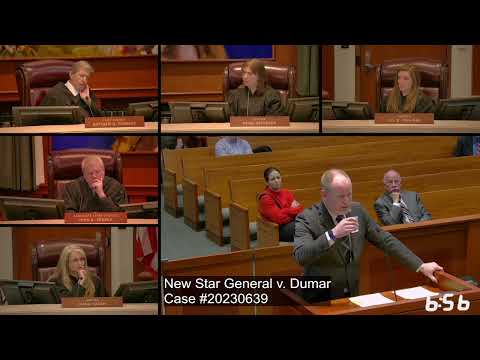
Utah Supreme Court hears challenge to NuStar lien and preliminary notices in condo project dispute
Summary
Appellants Dumar LLC and Duane Shop told the Utah Supreme Court that NuStar’s preliminary notices named inactive parent parcel numbers and failed to allocate work between units and common areas; NuStar says parties received the value and longstanding lien law protects its claim. The court heard extensive questioning and took the case under advisement.
The Utah Supreme Court on Thursday heard oral argument in NewStar General Contractors v. Dumar, a dispute over whether contractor NuStar’s preliminary notices and construction lien materially complied with the state’s construction-lien and condominium statutes after lender Broadmark foreclosed on much of the development.
Taylor Fox, counsel for appellants Dumar LLC and Duane Shop, told the court his clients were improperly charged for the whole cost of work on Building C even though they own only 12 condominium units and a proportional share of the building’s common areas. "We are being charged for 100% of the common areas and we didn't own 100% of the common areas," Fox said, arguing that NuStar’s notices referenced inactive parent parcel numbers rather than the platted parcel numbers for the individual units and that the lien failed to allocate which work benefited units versus common areas.
Fox asked the court to apply a strict notion of substantial compliance and to consider the potential for harm to third parties who search by parcel number (title companies, lenders and downstream subcontractors). He told justices that roughly $475,000 of the work at trial had been allocated to areas outside Building C and that, based on NuStar’s records, about $2,000,000 of the roughly $3,900,000 cost to build Building C was common-area work that should not be charged entirely to his clients.
Andrew Burn, counsel for NuStar General Contractors, countered that appellants obtained the value of the improvements through the parties’ real estate purchase contracts and that NuStar’s lien secures the value it added. "The point of the construction-lien statute is to make sure that the people who do the work have an interest in that value," Burn said, urging the court not to allow technical defects to defeat the contractor’s preferred claim. Burn invoked existing precedent and argued that blanket liens and statutory substantial-compliance provisions permit finding notice sufficient where multiple registry search options would lead third parties to the filing.
The bench pressed both sides on two linked questions: (1) whether the Building C agreement was a new "original contract" that required its own preliminary notice or simply an amendment to a site-work contract, and (2) whether a preliminary notice that used parent parcel numbers rather than newly platted unit parcel numbers could cause actual or potential prejudice to third parties. Justices explored how title companies, banks or buyers conduct searches on the State Construction Registry (by party name, address, job number or parcel number) and whether relying on alternative search fields renders an imperfect parcel number harmless for purposes of substantial compliance.
Counsel for appellants emphasized the foreclosure by lender Broadmark: Broadmark foreclosed on its senior lien across the development, and appellant counsel said that foreclosure extinguished NuStar’s lien as to Broadmark’s interest, meaning NuStar cannot look to appellants to recover amounts attributable to Broadmark’s former share. Appellee responded that blanket liens are an established remedy and that the record shows appellants paid amounts labeled for Building C, that allocations would not change the essential entitlement to recover the value of the work performed.
No decision was announced from the bench. The court thanked counsel and proceeded to the next calendared case. The outcome will determine how strictly contractors must identify platted condominium parcel numbers on preliminary notices, and how courts should allocate lien exposure when senior lenders foreclose partial interests in multi-parcel condominium projects.
Next steps: the court will issue a written opinion resolving whether NuStar’s filings substantially complied with the notice statutes and whether the trial-court judgment should be adjusted or reversed.