
State emergency managers urge utilities to strengthen outreach for people with access and functional needs ahead of PSPS events
Get AI-powered insights, summaries, and transcripts
Subscribe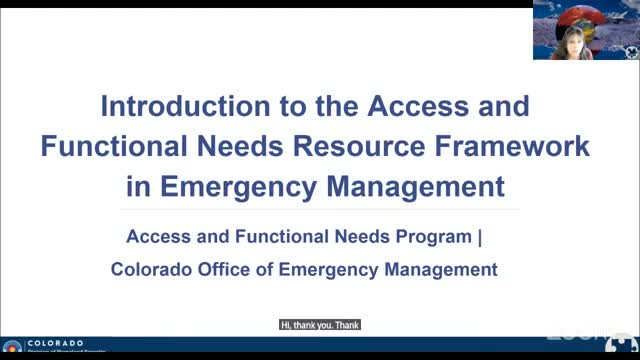
Summary
Colorado emergency management officials told the Public Utilities Commission that Xcel's planned public safety power shutoffs must be paired with multi-modal outreach and local partnerships so residents who rely on medical devices or lack digital access are not left behind.
Sadie Martinez, Access and Functional Needs Program Supervisor at the Colorado Office of Emergency Management, told the Colorado Public Utilities Commission on Feb. 21 that planning for public safety power shutoffs must start with identifying concrete resource needs for people who do not self-identify as having disabilities. "I'm Sadie Martinez. I'm the Access and Functional Needs Program Supervisor here at the Office of Emergency Management in Colorado," she said during a presentation to the commission.
Martinez introduced the CMIST framework (communication, maintaining health, independence, support/services and transportation) as a way to specify the actual resources a person needs during a disruption rather than relying on labels. She cited examples where naming the resource clarifies response actions: "In the shelter, we actually need an ASL interpreter. We need a backup power because we have several people using a CPAP machine," Martinez said, urging utilities and emergency managers to plan for those concrete gaps.
The presentation emphasized multi-modal outreach to reach people who lack smartphones, email or reliable cell coverage, and who speak languages other than English. Martinez told commissioners that opt-in registries are difficult to maintain and can create false expectations of rescue; instead she recommended working with trusted community connectors (local organizations, paratransit providers and health agencies) to identify needs and target assistance. "We have about 50 people in this community that rely on backup power. Otherwise they could die," she said as an example of the kind of count local partners can provide while preserving privacy.
Commissioners asked whether Xcel Energy and other utilities are participating in those coordination efforts; Martinez said Xcel attends monthly meetings and conferences with DHSEM but cautioned that not all power companies have engaged. She urged utilities to expand public-facing preparedness campaigns in multiple languages and include American Sign Language in briefings and outreach.
The commission's staff asked presenters to submit written materials and any flyers or frameworks to be filed into the proceeding so the commission can rely on them in its decision-making. Martinez said she would provide a flyer and resources and encouraged continuing coordination between utilities, public health, local emergency management and community-based organizations.
The session closed with commissioners endorsing the need for multi-agency planning and stronger outreach to ensure PSPS procedures do not disproportionately harm people with access and functional needs. The commission asked for follow-up materials and indicated those documents would be filed into the record for the ongoing Xcel Energy proceeding.