Get Full Government Meeting Transcripts, Videos, & Alerts Forever!
Get email alerts on the Behavioral Health Services topic
No spam. Unsubscribe anytime.
Viya/RHA update: Alamance diversion center served 723 people in October; facility‑based crisis unit still awaiting state licensure
Summary
Viya/RHA briefed commissioners on services at the Alamance diversion center, including peer support, mobile crisis response and a behavioral urgent care operating 7 days/16 hours; the planned 16‑bed crisis unit is pending state licensure and staffing, and commissioners pressed the provider on security and municipal participation in coverage.
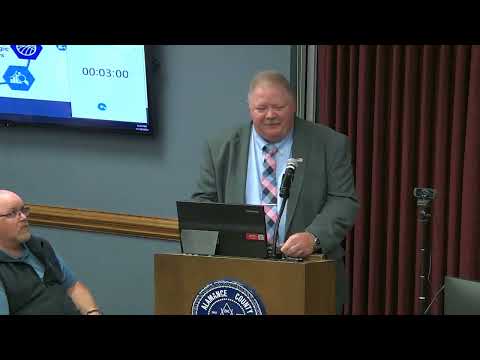
Viya/RHA officials told the Alamance County Board of Commissioners on Nov. 18 that the county diversion/behavioral health center is providing multiple services aimed at diverting people from hospital emergency departments and connecting them to community care.
Donald Roos, vice president for behavioral health and IDD network operations at Viya, said the center currently offers peer support and a peer‑bridger program, a community support team, an assertive community treatment team, medication management and outpatient therapy, a peer living room drop‑in service, and mobile crisis teams working across the county. He said behavioral urgent care is operational seven days a week for 16 hours per day with eight beds available; the facility‑based crisis unit — a 16‑bed locked unit described as the county's highest‑level facility — is staffed and licensed only after a successful state Division of Health Service Regulation (DHSR) site review and remains pending.
"Last month in October, they served 723 unique individuals through that center," Roos told the board and offered to provide a breakdown of how many were walk‑ins, scheduled appointments or law‑enforcement drop‑offs.
Commissioners focused questions on security and operational coverage. Roos said RHA currently pays for posted security under its contract (two shifts a day, seven days a week, 16 hours daily) and that RHA is recruiting to cover remaining hours. He said the facility is also developing a co‑responder model with the sheriff's department to have mobile crisis teams coordinate with deputies on some calls. Sheriff Johnson said one deputy is currently assigned to the center (typically daytime hours) and cited manpower constraints; commissioners discussed extra‑duty/off‑duty assignments as a way to expand coverage while the sheriff's office increases staffing through new hires and sign‑on incentives.
Roos said the application for licensing the 16‑bed facility had been submitted to DHSR and had been with the agency for about a month; RHA is seeking to expedite scheduling of the site review. He said staffing and training are required steps before licensure can be issued and acknowledged that until the crisis unit is licensed it cannot accept involuntary commitments by law enforcement.
What happens next: Viya/RHA will provide the requested breakdown of October service users (walk‑ins vs. law‑enforcement drop‑offs) and will continue working with county staff and the sheriff to expand coverage; commissioners signaled interest in exploring budget and intergovernmental cost‑sharing for security and off‑duty coverage.
Clarifying details: the urgent care currently operates 7 days a week, 16 hours per day with eight operational beds; the facility‑based crisis unit is a planned 16‑bed locked unit pending state licensure and staff training; RHA currently funds two security shifts (paid by RHA) and is seeking off‑duty deputies to cover remaining hours.