Get Full Government Meeting Transcripts, Videos, & Alerts Forever!
Get email alerts on the Land Use Subdivision topic
No spam. Unsubscribe anytime.
Alamance County Holds Public Hearing on Major Lot‑Size Increase; Commissioners Ask for More Study
Summary
County planning staff presented proposed changes to the subdivision ordinance that would raise minimum rural lot sizes to roughly 1.5 acres and change cul‑de‑sac standards. Speakers at a lengthy public hearing split between protecting farmland and concerns about housing affordability; commissioners directed further study rather than adopting the changes today.
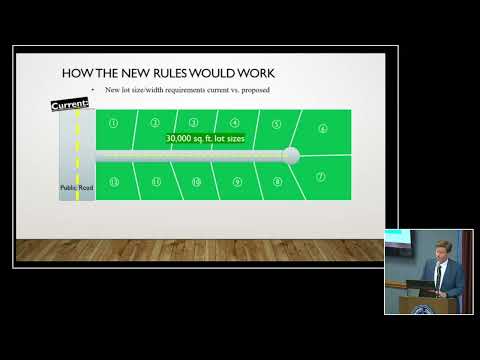
Alamance County planning staff presented four proposed changes to the county’s subdivision ordinance on Sept. 3, including raising the minimum lot size for unincorporated non‑watershed lots from 30,000 square feet to 65,000 square feet (about 1.5 acres), applying the same 65,000‑square‑foot minimum to balance‑of‑watershed lots, increasing cul‑de‑sac frontage measured “along the chord” from 20 to 26 feet, and adding a 75‑foot building‑site width requirement for cul‑de‑sac lots while exempting lots of 2 acres or larger from the width rule.
The presentation noted the planning board recommended the narrower package after earlier, broader proposals deadlocked in a prior meeting. The planning‑board statement of consistency cited North Carolina General Statute 160D‑604(d).
Why it matters: Commissioners and residents framed the debate as a choice between preserving rural character and farmland versus preserving affordable, starter housing and the county tax base. Proponents said larger lots reduce impervious surface and help protect watersheds; opponents said larger minimums would raise development costs and shrink housing supply.
Residents and industry voices split sharply. Septic and well contractor Chris Faust told the commissioners, “If we do this, we’re gonna double the size…we’re getting half the lots,” arguing that the proposal would raise monthly housing costs and reduce supply. Builder Jeff Thornburg, who said he provided data to planning meetings, warned higher minimums would “cripple” the supply of entry‑level housing. By contrast, farmer Henry Vines said larger lots would preserve rural land and help avoid urbanization of the county’s countryside.
Board response and next steps: Commissioners asked detailed questions about the technical basis for specific measurements, whether the cul‑de‑sac width was tied to fire code (staff said no), and whether the county could encourage clustering in lieu of a blanket minimum. After public comment, the board declined to adopt the amendments and instead directed county staff — in consultation with the planning board — to return with a clearer, more defined package and additional analysis on possible area‑specific standards and incentives for cluster development.
The hearing drew extensive public comment from developers, realtors, engineers, farmers and residents and is expected to inform a follow‑up deliberation. No ordinance was adopted at this meeting.