Get Full Government Meeting Transcripts, Videos, & Alerts Forever!
Get email alerts on the Landfill Methane And Operations topic
No spam. Unsubscribe anytime.
Residents press Benton County over Coffin Butte methane and fires as Republic Services presents 2023 report
Summary
Residents and technical experts challenged Republic Services’ 2023 annual report and raised methane, fire and groundwater concerns about Coffin Butte Landfill; Republic described investments in gas collection and monitoring and said it had not received formal EPA enforcement notice. The board kept the record open and asked DSAC to review.
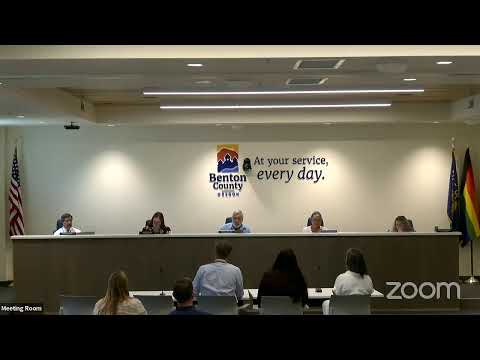
Public comment at the Aug. 6 Benton County Board of Commissioners meeting centered on Coffin Butte Landfill, where residents, a whistleblower and local technical experts urged the county to scrutinize Republic Services’ operations and recent annual reports.
Robert Orton, who identified himself as a Coffin Butte whistleblower, told commissioners he was fired after presenting video showing “active methane leaks on the working face,” and urged the board to “take a deeper look” beyond the company presentation. Several other residents described recurring fires, after‑hours smoke, and personal impacts on air quality and evacuation routes.
Why it matters: speakers said methane leaks pose both immediate fire risk and longer‑term climate and health harms for communities downwind of Coffin Butte. Technical commenters asked the board not to accept the 2023 report without further review because, they said, it omitted or downplayed EPA activity and monitoring details.
Republic Services’ presenters described their monitoring and mitigation work and answered commissioners’ questions. Ginger Richardson, Republic’s director of public affairs, said the company had invested in a robust gas collection system and recent capital work: “We have not been notified officially by the Environmental Protection Agency that Coffin Butte Landfill is subject to an enforcement action,” she told the board, while also acknowledging EPA surface monitoring in June and saying Republic was evaluating additional steps to reduce emissions.
Company details cited to the board included an estimated $9.5 million invested in gas‑collection system upgrades since 2019; active drilling and installation of new vertical and horizontal wells; biogas generation that Republic said currently powers about 4,000 homes; and plans to expand capture and beneficial reuse in partnership with PNGC. Republic also described groundwater monitoring twice yearly per DEQ’s approved plan and said most 2023 results were below regulatory standards, while acknowledging some compliance wells historically show elevated values for naturally occurring arsenic.
Board response and next steps: Commissioners pressed Republic for more localized data and for clearer documentation of the 2022 methane exceedances and what remediation steps followed. Several commissioners said the county’s Disposal Site Advisory Committee (DSAC) should have more time to review monitoring data before the board accepts the annual report. Chair Zann Ojuro said the county would hear the company’s presentation but “will not take action on it today” and indicated the record would remain open pending DSAC follow‑up.
What was not decided: The board did not accept or reject the 2023 annual report at the meeting; it did not approve the company’s expansion request during this session. The county directed staff and DSAC to assemble additional data — including complaint logs, the DEQ monitoring report, and a clearer summary of steps taken after the 2022 surface monitoring findings — for future consideration.
Ending: Commissioners asked Republic and staff to include an acknowledgement of the 2022 methane issues and a clear, documented account of remedies in the record; Republic agreed to provide additional materials and memos for the county and DSAC to review.