Get Full Government Meeting Transcripts, Videos, & Alerts Forever!
Get email alerts on the Permitting Systems topic
No spam. Unsubscribe anytime.
Benton County adopts phased roadmap to improve permitting; consultants urge 'crawl before you walk'
Summary
County staff and consultants presented a three‑phase roadmap to streamline permitting and licensing: standardize processes and cross‑train staff, create an interim unified user experience, then launch an integrated online permitting platform. Commissioners praised the collaborative approach and noted $100,000 was allocated for discovery work, about half spent.
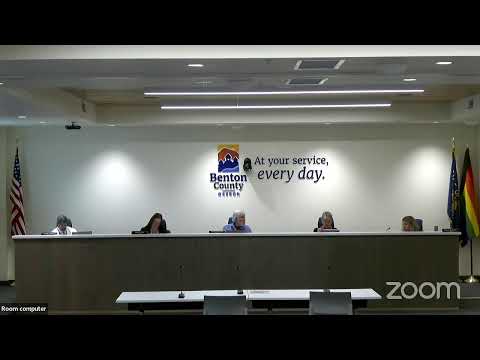
Benton County commissioners on Sept. 17 heard a progress report on a planned overhaul of the county’s permitting and licensing system designed to make it clearer and faster for residents and businesses.
Rick Krager, a county staffer, said the board allocated $100,000 for discovery work and that roughly half of that appropriation has been spent on consultant services and staff engagement. Autumn Carter, managing partner at Next Strategies, described a three‑phase approach: Phase 1 (standardize processes, cross‑train staff and document procedures), Phase 2 (improve customer‑facing materials and the website) and Phase 3 (deploy an integrated online permitting platform with application, payment and status tracking).
Carter said the project prioritizes ‘clarity, connectedness and consistency’ and emphasized a people‑first approach: staff cross‑training and better documentation must precede major technology investments. The consultants reported interviews with department directors and recent customers, a SWOT analysis and multiple work sessions that identified common gaps in people, process, information and technology.
Commissioners and staff welcomed the incremental plan. Commissioner Pat Malone said the county should ‘crawl before we walk’ and stressed that data accuracy is essential to any integration. Krager and Carter said the roadmap anticipates Phase 1 work beginning Oct. 2024 with a tentative Phase 3 rollout through 2026, and they urged the board to focus on low‑cost, high‑impact steps now.
The presentation did not request formal spending authority for additional phases; commissioners asked for progress reports as the county prepares project plans and evaluates staffing and IT needs. County staff said they will return with next steps and implementation details for the board to consider.