Get Full Government Meeting Transcripts, Videos, & Alerts Forever!
Get email alerts on the Bridge Inspections topic
No spam. Unsubscribe anytime.
County engineer warns closed Volga-area truss bridge likely needs replacement after fractured steel eye bars found
Summary
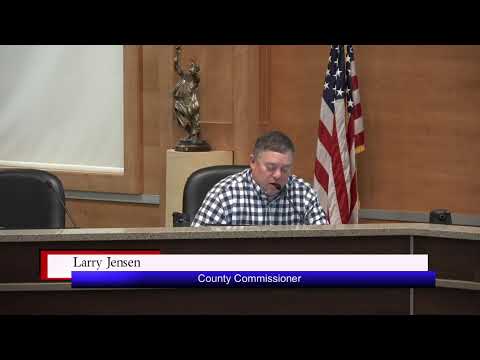
Banner & Associates presented 2024 bridge inspection findings to the Brookings County Commission, noting a closed truss bridge north of Volga with fractured eye bars and a current 4‑ton load posting; staff recommended permanent barricades and pursuing replacement grants rather than a complex repair.
Collins Waska of Banner & Associates told the Brookings County Commission on Dec. 17 that his 2024 inspection of the county’s west‑of‑I‑29 bridges found a range of maintenance needs and several structures needing closer monitoring. "I looked at 83 structures that are over 20 feet on the national inventory," Waska said, and moved three structures from a two‑year to a one‑year inspection cycle to track deterioration more closely.
Waska highlighted one truss bridge north of Volga where he "found fractured eye bars on it" and said the structure is currently closed. He described the updated load rating as "recommended as 4 ton," roughly 8,000 pounds, and noted the ride quality and driver behavior make reopening risky. "I think it could be reopened at 4 tons," he said, but added that repeated overweight crossings and deterioration leave doubt about a safe reopening.
Highway staff described repeated problems with temporary signage being removed and carried into the river at the site, and urged a more permanent barricade. One commissioner suggested installing cement blocks to prevent signs from being taken down.
Waska said replacing forged eye bars would require disassembling truss components that have been corroding for decades, and that a satisfactory repair may not be practical: "I don't know if it can be repaired," he said. He and staff recommended pursuing replacement planning and grants rather than an uncertain, labor‑intensive repair that could mix steel grades and create new structural issues.
The presentation covered other recurring issues: older steel‑beam bridges with deteriorated concrete decks, timber‑pile abutment decay on some rural bridges and the need for more routine deck sealing on newer concrete bridges. Waska also described efforts to develop a county GIS system to track bridge inspections, maintenance and grant documentation to support future replacement funding.
Commissioners asked staff to consider a concrete barricade at the closed truss span and to return with cost and next‑step recommendations; Waska said he could seek firms that specialize in historic truss work but cautioned estimates would be preliminary and possibly speculative.
The county did not take an immediate vote to repair or replace the Volga‑area truss bridge; staff listed next steps as installing more permanent closure measures and preparing a follow‑up report with cost options and grant strategies.