Get Full Government Meeting Transcripts, Videos, & Alerts Forever!
Get email alerts on the Instructional Materials Policy topic
No spam. Unsubscribe anytime.
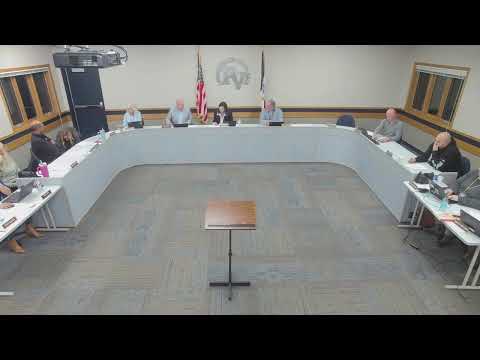
Pleasant Valley board adopts stricter review for donated instructional materials after debate
Summary
The Pleasant Valley Community School District board adopted revisions to policies governing donated instructional materials that route gifts through teacher-librarian review. Members debated whether to bar unsolicited donations outright or create an application process to protect quality and limit staff burden.
The Pleasant Valley Community School District board on Monday approved updates to district policies governing donated instructional materials, moving to require teacher-librarian review and limiting acceptance of unsolicited gifts.
The board’s action follows months of administrative review and a multi-member debate over language that, as drafted, would prevent the district from unilaterally accepting boxes of unsolicited books or materials without prior collaboration. An administrator presenting the recommendation told the board the change aims to protect students and preserve instructional quality while ensuring compliance with recent state rules. “We’re finding that, authors and illustrators, and, again, well intended, they’re trying to get their message out,” the administrator said during discussion, adding that some donated texts lacked professional publication reviews and were of low quality.
The proposed policy revisions were presented as updates to board policies 603.08 and 605.03 and reflect a process in which teacher-librarians — described in the presentation as the district’s certified professionals for collection decisions — would vet donated materials for quality and alignment. Board members pressed for clarity on scope: whether the rule would cover only library books or also instructional materials, classroom donations, or equipment. Administration said the policy language covers instructional materials and library collections and that there are existing processes for items bought or solicited through district collaboration.
Several board members voiced concern that an outright ban on unsolicited donations could close the door to well-intentioned community contributions. One member suggested an application-based approach so donations could be considered without overwhelming library staff; others stressed that teacher-librarians would make collaborative, not unilateral, decisions. Administrators cited examples in which districts received large boxes of self-published material that teacher-librarians later determined were not suitable for the collection.
Despite differing views about whether to retain the word “unsolicited” or to create a formal application process, the board moved to adopt the presented language. The motion to adopt the revised policies was made, seconded and carried in a roll-call vote in which the meeting record shows at least one dissenting vote.
The policies now place responsibility for vetting donated texts and instructional materials with certified teacher-librarians and emphasize that materials provided as part of a district collaboration may be handled differently than unsolicited donations. The board directed administration to circulate the adopted policy text and implementation guidance to building staff and to return with any needed clarifications or operational processes at a future meeting.
What’s next: The board’s action implements the new review process; administrators said they will provide written procedures explaining how community groups, PTAs and individuals can propose donations or collaborative projects for district consideration.