Get Full Government Meeting Transcripts, Videos, & Alerts Forever!
Get email alerts on the Infrastructure Policy topic
No spam. Unsubscribe anytime.
Council presses county and DEQ timelines as Junction City weighs traffic fixes and wastewater limits
Summary
Councilors warned that DEQ requirements and a municipal administrative order may constrain growth and connectivity; staff estimated most restrictions could ease in about 3–5 years, while full plant upgrades may take up to 10 years. Members asked staff to engage Lane County and traffic engineers about safety and intersection improvements.
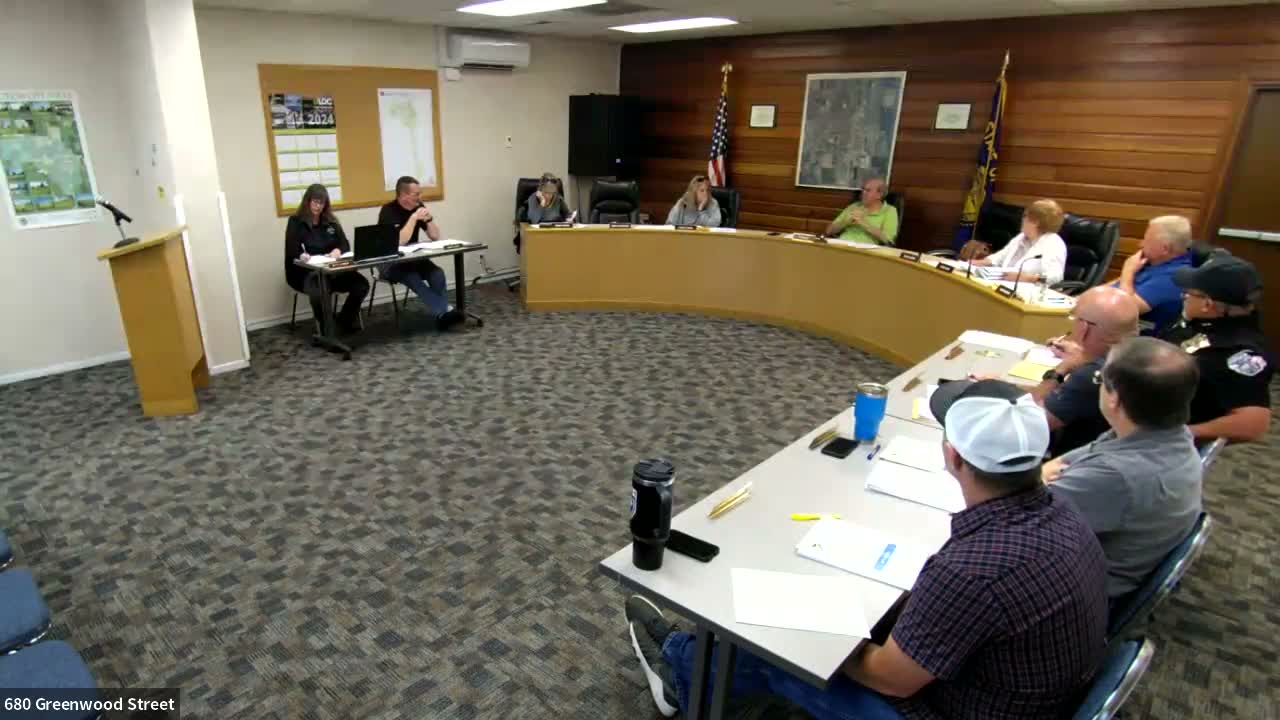
Junction City councilors spent a substantial portion of their Aug. 13 meeting discussing traffic safety on county-owned highways and state DEQ requirements that could limit development until wastewater upgrades are completed.
Councilors and staff described recurring congestion and pedestrian-safety gaps on major thoroughfares that run through the city and into county jurisdiction. One staff member suggested staff begin outreach to Lane County and a traffic engineering firm the city has used previously to identify smaller, targeted fixes rather than a costly, city-wide study that the council does not expect will succeed without county support.
The policy discussion shifted to wastewater capacity and regulatory constraints. A staff speaker described a realistic timeline tied to a phase 1 wastewater upgrade and Municipal Administrative Order (MAO), saying the window to see most restrictions ease is roughly three to five years, while completing an entire treatment-plant upgrade could take closer to 10 years. The staff speaker framed the 10-year figure as the time to complete all upgrades, not an immediate moratorium period: “I think the big driver for the restrictions and connections is going to be a phase 1 project of the wastewater along with some of the things we have to do in the MAO... You’re probably going to be something more like a 3 to 5 year window,” the speaker said.
Councilors repeatedly noted that many of the road segments where pedestrians and students must cross are county-owned, which limits what the city can do without Lane County cooperation. One staff participant said the city’s past efforts had been met with strong opposition from the county on a particular intersection project: "That just did not Lane County tore us apart over that," the staff participant said, describing prior negotiations.
What the council asked staff to do
- Reach back to Lane County and to a traffic engineer to scope targeted intersection improvements and possible funding pathways rather than assuming a large ODOT-funded study. - Continue to pursue state funding and one-stop meetings with state agencies to explore grants, loans and other programs to support water and wastewater projects. - Track and report back on the RFP timeline for the municipal court judge and on staffing progress tied to DEQ compliance work.
Why it matters
DEQ-related requirements and MAO milestones affect developers, property owners and residents because they can trigger connection restrictions or moratoria on new building until capacity issues are addressed. Traffic-safety fixes affect school routes and neighborhood walkability; councilors emphasized practical, incremental steps could be more successful than waiting for a large, county-led study.
Next steps: staff will contact Lane County and the traffic engineering consultant used previously, invite DEQ or other state partners to a public works update, and return recommended next steps to the council.